

Hard water carries more dissolved calcium and magnesium than soft water, so when you notice more hair falling out in the shower after moving to a new home, the water is an easy thing to blame. The research on hard water and hair is small, and it points in two directions. Lab studies have measured hair strength and mineral deposits, but none of them measured hair loss from the scalp. Dermatologists separate normal shedding, breakage, and true hair loss, and each one has different causes.
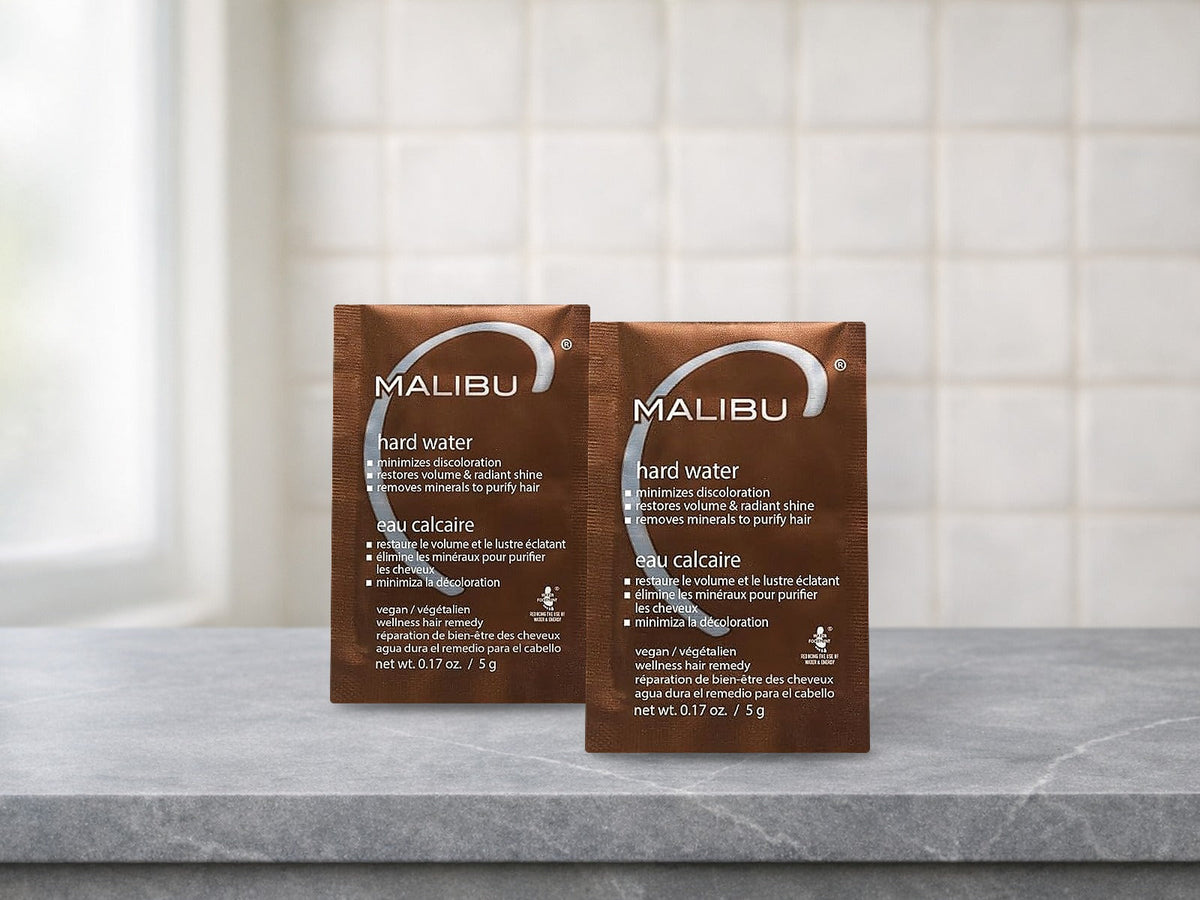
Want to shop first? See Malibu C Hard Water Wellness Remedy (12 Packets), a hair treatment for mineral buildup from hard water.
The Short Answer
- The published studies on hard water and hair tested hair samples in a lab, and none of them measured hair loss from the scalp.
- Two lab studies from Pakistan, published in 2016 and 2018, found that hair treated with hard water for three months was measurably weaker than hair soaked in deionized water, which the authors linked to breakage.
- A 2013 lab study found no difference in strength or stretch, and a 2017 study found more magnesium on hair washed in hard water but no visible damage to the hair surface.
- The American Academy of Dermatology (AAD) says shedding 50 to 100 hairs a day is normal. Cleveland Clinic lists common causes of hair loss such as genetics, hormonal changes, stressful events, medical treatments, and tight hairstyles.
What Hard Water Is
The U.S. Geological Survey (USGS) defines water hardness as the amount of dissolved calcium and magnesium in water. It classifies water with 0 to 60 milligrams per liter (measured as calcium carbonate) as soft, 61 to 120 as moderately hard, 121 to 180 as hard, and more than 180 as very hard. The USGS notes that groundwater picks up these minerals as it moves through soil and rock.
The USGS explains that soap reacts with the calcium in hard water to form soap scum, and that more soap or detergent is needed to wash hands, hair, or laundry. That film is the residue you may feel on your hands after washing. For what research says about hard water and skin, see Does Hard Water Dry Out Your Skin? What Research Says About Eczema.
Hair Falling Out in the Shower: Shedding, Breakage, or Loss?
Hair that comes out while you wash is not always hair loss. The AAD and Cleveland Clinic describe three different things:
- Normal shedding. The AAD says it is normal to shed between 50 and 100 hairs a day, and Cleveland Clinic says most healthy people lose up to 100 strands a day as part of the hair growth cycle. New strands grow in to replace them.
- Excessive shedding. When the body sheds much more than that every day, the medical term is telogen effluvium. The AAD lists triggers such as losing 20 pounds or more, giving birth, high fever, surgery, major stress, and stopping birth control pills. The shedding usually shows up a few months after the event, and the AAD says hair tends to regain its normal fullness within six to nine months once the body readjusts.
- Hair loss. The AAD says hair loss happens when something stops hair from growing. Its list of common causes includes hereditary hair loss, an overreacting immune system, some drugs and treatments, hairstyles that pull on the hair, harsh hair care products, and a compulsion to pull out one's hair.
Breakage is a fourth thing. The AAD explains that damaged hair is fragile and tends to break, leaving frizzy, unhealthy-looking hair, and that continued damage can eventually lead to thinning hair or even bald spots.
Cleveland Clinic's list of the most common causes of hair loss covers genetics, fungal scalp infections, tight hairstyles, processing such as perms and bleach, hormonal changes, medical treatments, low iron or protein, stressful events, and thyroid disease. Hard water is not on either list.
What the Research Measured
Researchers in Pakistan tested whether hard water weakens hair. In a study published in the Journal of the Pakistan Medical Association in 2016 (Luqman and colleagues), they collected hair from 76 men living in the district with the softest water they sampled. Each sample was split in half. One half was treated with hard water from the district with the hardest water they found, for 10 minutes on alternate days for three months. The other half was treated the same way with deionized water.
A universal testing machine then measured tensile strength, the force a hair can take before it snaps. Hair treated with hard water averaged 238.49, compared with 255.36 for hair treated with deionized water, a statistically significant drop. The authors described their question as weakening of hair and breakage, not hair loss.
The same group repeated the test in a study published in the International Journal of Trichology in 2018, this time with hair from 70 men split three ways: untreated, deionized water, and hard water, again for three months. Strength was 255.49 for untreated hair, 254.84 after deionized water, and 234.16 after hard water. Only the hard water group differed significantly from the untreated hair. Their hard water measured about 487 milligrams per liter as calcium carbonate, well past the USGS cutoff for very hard water.
A 2017 study in the Indian Journal of Dermatology, Venereology and Leprology (Alahmmed and colleagues) took a different approach. Hair from 20 healthy volunteers in Saudi Arabia was washed with either hard or soft water for three weeks, then examined with a scanning electron microscope. The researchers found no significant difference in surface damage between the groups. Calcium deposits did not differ either, but magnesium deposits were significantly higher on the hair washed with hard water. The authors concluded that hard water may be linked to more deposits on the hair surface without causing visible structural changes, and they called for larger, longer studies.
All three studies tested hair samples in a lab. None of them followed whether people who wash with hard water lose more hair from the scalp.
A Study That Found No Difference
An earlier study in the International Journal of Trichology in 2013 (Srinivasan and colleagues) collected 10 to 15 strands of hair lost during combing from 15 volunteers. Half of each sample was soaked in hard water (212.5 milligrams per liter as calcium carbonate) and half in distilled water, for 10 minutes on alternate days for 30 days. The researchers found no statistically significant difference in tensile strength or elasticity between the two groups, and they concluded that hard water did not interfere with either measure.
In their 2018 paper, the Pakistan group suggested the results may differ because their hard water was more than twice as hard, the exposure lasted three months instead of one, and their sample was larger. Both the 2017 and 2018 authors said larger or more detailed studies are needed.
What Dermatologists Recommend for Hair Breakage
Whatever your water, the AAD's list of habits that damage hair is a useful place to start. Its tips include:
- Massage shampoo into your scalp, and let it flow through the length of your hair as you rinse instead of rubbing it in.
- Use conditioner after every shampoo.
- Wrap wet hair in a towel or let it air dry instead of rubbing it with a towel.
- If your hair is straight, let it dry a bit before gently combing with a wide-tooth comb. If it is textured or tightly curled, comb it while damp with a wide-tooth comb.
- Use the lowest heat setting on blow dryers and limit how long hot tools touch your hair.
- Wear hair loosely pulled back and switch up styles that pull, such as tight ponytails, buns, and cornrows.
If you also see a dull film or rough feel from tap minerals, How to Remove Mineral Buildup From Hair: Hard Water Treatment Steps walks through the routine.
When to See a Dermatologist
Cleveland Clinic advises calling a healthcare provider if you have burning, itching, or irritation on your scalp, excessive daily shedding, hair loss on your body as well as your scalp, or sudden loss of large amounts of hair. The AAD says a dermatologist can tell whether you have hair loss or excessive shedding, or both, and that the sooner treatment begins, the better the outlook. If you think a medication is causing hair loss, the AAD advises talking with your doctor rather than stopping it on your own.
Where Hard Water Wellness Remedy Fits
Malibu C Hard Water Wellness Remedy (12 Packets) is a hard water hair remedy from Malibu C that comes in 12 single 5-gram packets. The packet label says it removes minerals to purify hair and minimizes discoloration. It is a cosmetic treatment for how hair looks and feels, not a treatment for hair loss. Follow the directions on the packet.
To tell mineral buildup apart from pool residue, see Hard Water vs Chlorine Hair: Which Treatment Do You Need?
FAQ
Should I worry about hair falling out in the shower after a stressful event?
Often it is temporary. The AAD says excessive shedding commonly follows events such as giving birth, surgery, a high fever, or major stress, usually a few months later, and that hair tends to regain its normal fullness within six to nine months. If the stress continues, the shedding can last longer, and a dermatologist can check what is going on.
Can hard water make hair break more easily?
Two lab studies from the same research group found that hair treated with hard water for three months had lower tensile strength than hair soaked in deionized water, and the authors linked that to breakage. A 2013 study with milder hard water and a shorter test found no difference.
Does hard water leave minerals on hair?
In the 2017 microscope study, hair washed with hard water for three weeks had significantly more magnesium on its surface than hair washed with soft water, though calcium levels did not differ and the surface showed no visible damage.
How do I know if it is hair loss or breakage?
The AAD explains that hair loss happens when something stops hair from growing, while damaged hair is fragile and tends to break. A dermatologist can tell you whether you have hair loss, excessive shedding, or both, and look for the cause.
Find more hair care guides in the Learning Center, or browse the Haircare collection.
Disclaimer
Pure Supply Shop shares this guide as general hair care information. It is not medical advice. Hair treatments like this one are cosmetic products for how hair looks and feels, and they are not intended to diagnose, treat, cure, or prevent any disease or condition. Follow the directions on the label, and stop using any product that burns, stings, or irritates your scalp. Talk with a doctor or dermatologist about sudden or patchy hair loss, heavy daily shedding, or a scalp that burns, itches, or is irritated, and before stopping any medication you think may be causing hair loss. Ingredients and formulas can change, so check the product label.


