

Skin over the knees and elbows takes a lot of pressure. You lean on a desk, kneel on the floor, and scrub those spots in the shower. A 2005 report in the dermatology journal Cutis describes a brown darkening over the elbows and knees that dermatologists commonly see, and it says friction and family history may play a role. Dark knees and elbows can also come from a skin condition that deserves a doctor's look, so the texture of the skin and how fast the change showed up both matter.
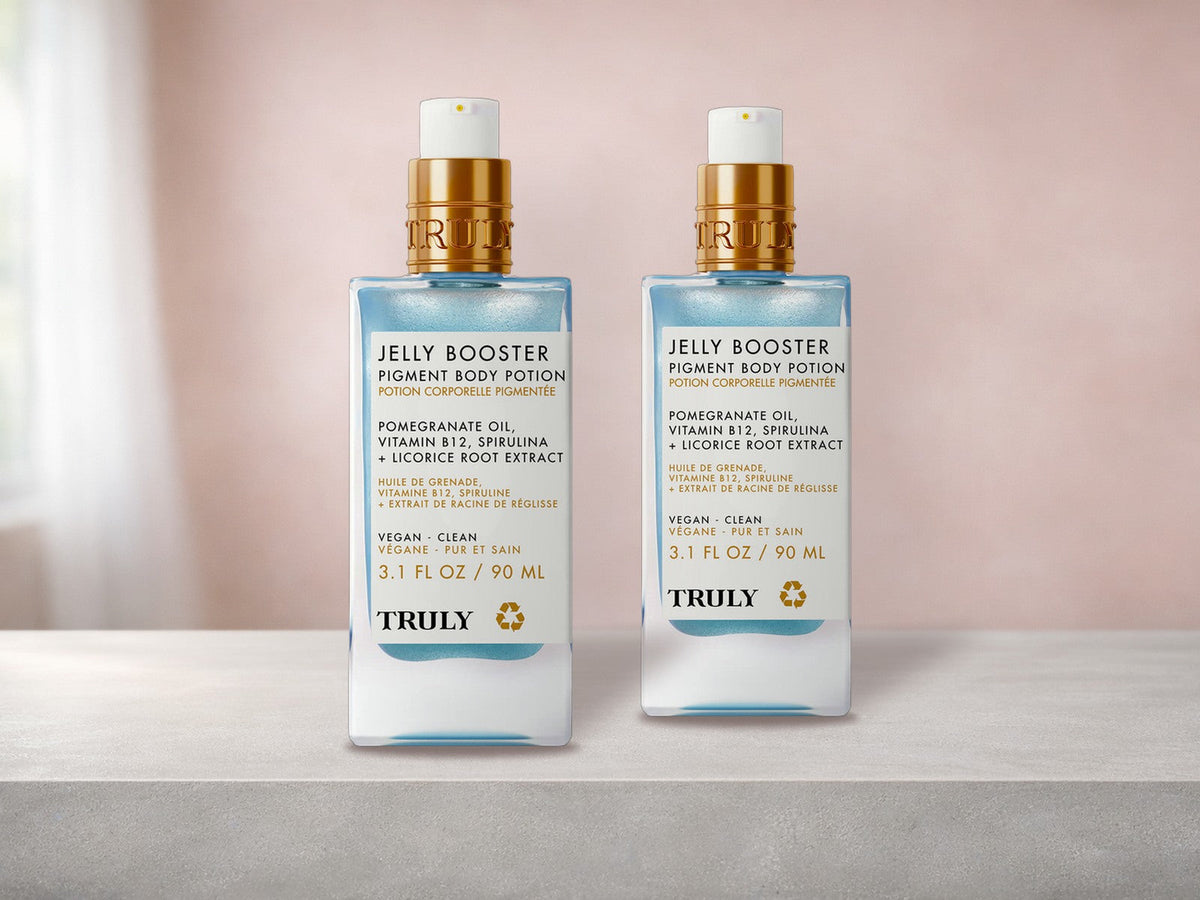
Want to shop first? See Truly Beauty Jelly Booster Serum, a body serum for after the shower. It is a cosmetic, not a treatment for dark knees or elbows.
The Short Answer
- A 2005 case series in Cutis describes even, brown darkening over the outer elbows and the fronts of the knees, with minimal scaling and no symptoms. The authors say friction and family history may both play a role.
- Studies from Jordan (2004) and Iraq (2001) described darker skin over bony areas of the body in patients who rubbed their skin hard while bathing, with scrub pads, towels, or a washing agent called lifa.
- The American Academy of Dermatology (AAD) lists the elbows and knees among the places acanthosis nigricans can form. These dark patches feel velvety and thicker than the skin around them, and they can be a sign of prediabetes or diabetes.
- Cleveland Clinic lists sun damage, skin injuries, hormone changes, and some medications among other causes of darker patches of skin.
Why Skin Over the Joints Turns Darker
Skin gets its color from melanin, a pigment made by skin cells. Cleveland Clinic explains that when those cells are damaged or unhealthy, they can make too much melanin, and the extra pigment can clump, so that area looks darker than the skin around it.
Thicker skin is part of the picture, too. Hyperkeratosis is the medical name for skin that thickens because the body makes too much keratin, a protein in the outer layer of skin. Cleveland Clinic lists pressure or rubbing of the skin among its causes and describes the main sign as rough patches of skin.
Dark Knees and Elbows From Friction
Krishnamurthy, Sigdel, and Brodell gave this pattern a name in Cutis in 2005: frictional asymptomatic darkening of the extensor surfaces, or FADES. The extensor surfaces are the outer side of the elbow and the front of the knee. The authors write that the condition is commonly seen by dermatologists but had never been well characterized, and they note its second name, hyperkeratosis of the elbows and knees.
In their series of cases, patients had uniform brown darkening over the extensor surfaces of the elbows and knees with minimal scaling, and it caused no symptoms. Skin samples typically showed hyperkeratosis, acanthosis, and mild papillomatosis, which are changes in the structure of the outer skin, with minimal inflammation. The authors say both frictional stress and family history may play a role.
For management, the report says keratolytic agents such as lactic acid and urea cream, along with avoiding frictional stress, can be effective. A dermatologist can tell you whether one of those fits your skin.
What Two Studies Found About Hard Scrubbing
Two studies looked at darker skin over bony areas in people who rubbed their skin hard while bathing.
In Iraq, Sharquie and Al-Dorky described 71 patients (70 women and one man) aged 16 to 43 in the Journal of Dermatology in 2001. All of them were slim, and all reported using a washing agent called lifa with vigorous friction during bathing. The pigmentation was brown-black with a rippled pattern. The areas most often affected were the collarbones (71.8% of patients), shins (36.6%), upper back (32.4%), Adam's apple (31%), and the outer sides of the arms (31%). Skin samples from 24 patients showed marked dermal melanosis, meaning extra pigment in the deeper layer of the skin. Eleven patients (15.5%) had a family history of the same condition.
In Jordan, Al-Aboosi and colleagues studied 13 patients (10 women and three men) seen at Princess Basma Teaching Hospital between 1999 and 2001, in a 2004 report in the International Journal of Dermatology. Eleven had diffuse brownish patches that caused no symptoms, and two had mottled patches, on the skin over the bones of the trunk and limbs. All had a history of rubbing their skin repeatedly with scrub pads (loofah) or bathroom towels. Skin samples from 10 of the patients showed a marked increase in melanin.
The Jordan authors believe repeated frictional trauma from clothing or scrub pads against skin over bony areas is central to the condition, and they add that rough scrub pads, darker skin type, and individual differences may also play a role. They advise patients not to use rough scrub pads when bathing, to avoid rubbing the skin over bony areas, to avoid rubbing vigorously, and to use a soft cotton pad instead.
Neither study singled out the knees or elbows, and both described groups of patients rather than a sample of the general public. They connect hard scrubbing with darker skin over bones, but they cannot show how often that happens. For more on gentle washing habits, see How Often Should You Shower? What Dermatologists Say About Daily Showers.
When the Dark Patch Feels Velvety
Acanthosis nigricans (AN) is a skin condition that causes dark patches, and the AAD lists the elbows, knees, and knuckles among the places it can form, along with the armpits, the back of the neck, and the groin. According to the AAD, skin with AN may:
- Have a brown or black discoloration.
- Feel velvety and thicker than the surrounding skin.
- Have skin tags.
- Itch.
- Have a bad odor.
The AAD says anyone can get AN, but people who are obese or overweight, people of Native American, African, Caribbean, or Hispanic descent, and people with a family history of AN have a greater risk. It names obesity as the leading cause. Completely healthy people get AN too, and they tend to have family members with it. AN can also be a sign of prediabetes or diabetes, a reaction to a medicine (the AAD names birth control pills, strong corticosteroids like prednisone, and niacin), or a hormonal condition such as polycystic ovarian syndrome, thyroid disease, or an adrenal gland problem.
AN usually forms slowly, over months or years. The AAD says that if it appears suddenly, you should make an appointment with a board-certified dermatologist right away, because sudden AN can be a warning sign of cancer.
Cleveland Clinic notes that AN can look like a stain you might think you can scrub off, but washing will not remove it. It also advises against using skin care products to treat dark spots without first talking with a healthcare provider, because they may not work and may irritate the skin.
Other Causes of Darker Skin
Cleveland Clinic lists several other things that can lead to darker patches of skin, including:
- Sun damage.
- An injury to the skin, such as a cut or burn. Cleveland Clinic says this is sometimes called post-inflammatory hyperpigmentation.
- Hormone changes, such as during puberty or pregnancy.
- Medications, such as birth control pills and drugs that make skin more sensitive to light.
- Adrenal disorders, such as Addison's disease, and thyroid disorders.
A scraped knee that heals darker than the skin around it fits the injury pattern. For more on those marks, see What Is Post-Inflammatory Hyperpigmentation? Why Dark Marks Linger After Skin Heals.
Everyday Steps From the Research
- Go easy on friction. The 2005 Cutis report lists avoiding frictional stress as part of management, and the Jordan authors advise against rough scrub pads and vigorous rubbing, suggesting a soft cotton pad instead.
- Protect the skin from the sun. Cleveland Clinic recommends a broad-spectrum sunscreen with SPF 30 or higher every day, along with protective clothing, and notes that new spots can appear over time without sun protection.
- Ask before treating a velvety patch. Cleveland Clinic advises talking with a healthcare provider before using skin care products on dark spots from AN.
- Give it time. Cleveland Clinic says treatments for hyperpigmentation can take a few months or a year to work.
When to See a Doctor
See a doctor or dermatologist if the darker skin:
- Feels velvety or thicker than the skin around it, or comes with skin tags, itching, or odor (AAD).
- Shows up suddenly (AAD).
- Is red, hot to the touch, itchy, painful, or leaking blood, pus, or other fluid (Cleveland Clinic).
Cleveland Clinic says a provider may ask when the darker skin started and which medications you take, look at the skin under a special ultraviolet light called a Wood lamp, order blood tests to check vitamins, hormones, iron, and thyroid function, or take a small skin sample. For AN, it notes that blood work can help confirm or rule out conditions such as diabetes.
Where Jelly Booster Serum Fits
Truly Beauty Jelly Booster Serum is a body serum from Truly for after the shower. It is a cosmetic for how skin looks and feels. It is not a treatment for dark knees or elbows, and it is not meant to lighten or fade darker skin, so the steps above still come first. Follow the directions on the label.
FAQ
Are dark knees and elbows normal?
It can be. The 2005 Cutis report describes friction-related darkening over the elbows and knees as commonly seen by dermatologists, and it caused no symptoms in the patients described. A velvety or thicker feel, skin tags, itching, or darkening that appears suddenly are reasons to see a dermatologist, according to the AAD.
Can scrubbing harder lighten darker skin on the elbows?
Not based on these studies. In the Jordan and Iraq studies, darker skin over bony areas showed up in patients who rubbed hard with scrub pads, towels, or lifa, and the Jordan authors advise against vigorous rubbing. Cleveland Clinic also notes that washing will not remove AN.
Does acanthosis nigricans always mean diabetes?
No. Cleveland Clinic says AN does not always mean you have diabetes or prediabetes, but it can be a sign of diabetes, so it is worth talking with a healthcare provider. The AAD notes that completely healthy people get AN too.
Does sunscreen matter for darker skin on the knees?
Cleveland Clinic lists sun damage as a cause of hyperpigmentation. It says hyperpigmentation cannot always be prevented, but protecting your skin from the sun helps. It recommends a broad-spectrum sunscreen with SPF 30 or higher every day.
Find more skin and body care guides in the Learning Center, or browse the Bodycare collection.
Disclaimer
Pure Supply Shop shares this guide as general skin care information. It is not medical advice. Body serums are cosmetic products for how skin looks and feels, and they are not intended to diagnose, treat, cure, or prevent any disease or skin condition. Patch-test new products, follow the directions on the label, and stop using any product that burns, stings, or causes irritation. Talk with a doctor or dermatologist about darker skin that feels velvety or thick, appears suddenly, or comes with itching, pain, or redness, and before stopping any medication you think may be causing discoloration. Ingredients and formulas can change, so check the product label.


