

Hair porosity describes how readily hair takes in and holds on to water, products, and treatments, and a 2020 overview from the New York Society of Cosmetic Chemists (NYSCC) ties it to the condition of the cuticle, the outer layer of each strand. The overview describes high-porosity hair as hair whose cuticle has been compromised by the shape of the strand, by handling, or by chemicals. Lab studies have measured porosity with gas and water vapor instead of a glass of water, and they have tracked how bleach, sunlight, daily grooming, and pool water change the surface of hair.
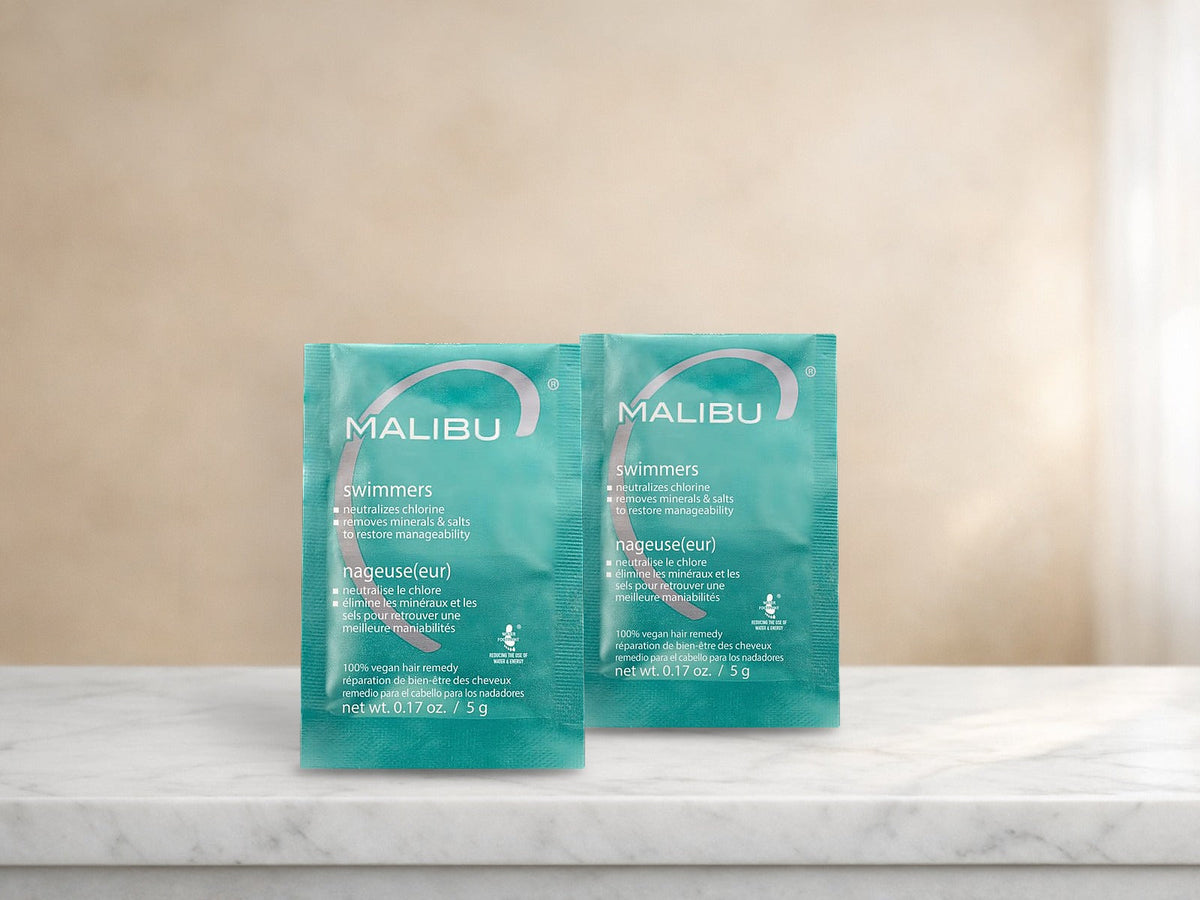
Want to shop first? See Malibu C Swimmers Wellness Remedy (12 Packets), a hair treatment in single packets for after swimming in chlorinated pools.
The Short Answer
- The NYSCC overview says porosity depends on how intact the cuticle is, that genetics and grooming habits both play a part, and that porosity can vary along the length of a single strand.
- A 2008 lab study in the Journal of Cosmetic Science measured pores with gas sorption and found that oxidative bleach nearly tripled the surface area of hair in the first minute of bleaching.
- A 2000 study in the Journal of Dermatology found hair discoloration in 61% of 67 elite swimmers on the Japan National Swimming Team and in none of 54 age-matched controls.
What Hair Porosity Means
A 2015 review of hair cosmetics in the International Journal of Trichology (Gavazzoni Dias) describes the cuticle as overlapping scales, like shingles on a roof, and says each cuticle cell has a thin protein membrane called the epicuticle. That membrane is covered by a lipid layer that includes a fatty acid called 18-methyl eicosanoic acid (18-MEA) and free lipids. The review says 18-MEA is responsible for the water-repelling quality of hair, and that removing it with alkaline chemical procedures may damage hair by making it attract water.
The NYSCC overview, written by Amber Evans, PhD, describes the two ends of the range:
- Low porosity: the cuticle layers lie flat, so hair resists water and chemical treatments. The overview lists hair that takes a long time to wet and dry, products that build up on the surface, protein treatments that leave hair stiff, and chemical treatments that work less than expected.
- High porosity: the cuticle has been compromised. The overview lists hair that absorbs water and dries quickly, keeps a dry feel, frizzes, and in some cases breaks easily. It adds that porous hair takes up hair color faster, with results that can be inconsistent.
Texture matters too. The overview says hair that is naturally wavy, curly, or coily is more likely to be porous than straight hair, because the twists in curls and coils lift the cuticle at points along the strand.
What Raises Porosity
Hessefort, Holland, and Cloud measured porosity directly in the Journal of Cosmetic Science in 2008. They used gas sorption to find the total pore volume, the spread of pore sizes, and the surface area of damaged hair, and they compared two kinds of damage. Oxidative bleach nearly tripled the surface area of hair in the first minute of bleaching because the number of pores rose. After 10 minutes, surface area dropped suddenly as smaller pores broke down into larger ones. UV damage followed a different path: surface area fell in the first 200 hours of exposure, then rose gradually as exposure went on.
Everyday care leaves a mark as well. In a 2011 study in the Journal of Cosmetic Science, Wiesche and colleagues used an automatic test device to simulate repeated daily shampooing, blow drying, and sunlight. Treated hair showed a marked loss of 18-MEA, and its water contact angles fell, which the authors call the direct consequence. They write that daily weathering and chemical treatments, especially oxidative bleaching, drastically reduce how well the outer hair surface repels water.
The NYSCC overview names more sources of cuticle damage: combing, brushing, and hygral fatigue, which is the strain of hair swelling when wet and shrinking as it dries, over and over. It says oxidative hair color and ultraviolet light can change porosity by oxidizing the protective lipids on the hair surface. The 2015 review says permanent dyes can damage the cuticle by removing 18-MEA.
Pool Water and the Cuticle
Nanko and colleagues examined 67 elite swimmers from the Japan National Swimming Team and 54 age-matched controls for a 2000 report in the Journal of Dermatology. Hair discoloration showed up in 61% of the swimmers and none of the controls.
The team looked at hairs from eight swimmers and two controls under scanning and transmission electron microscopes. The swimmers' golden, discolored hair had no cuticle left. Their melanosomes, the granules that hold hair pigment, were fewer and smaller than in the controls, and the discolored hair held less sulfur. Elemental analysis found chlorine in the melanosomes of every swimmer's golden hair sample and detected no element in the control hairs. The authors suggest the discoloration came mainly from cuticle damage caused by friction with water, and that hypochlorous acid in pool water can pass through the cuticle into the inner part of the strand, the cortex, and oxidize and degrade the melanosomes there.
The microscope work covered ten people, and the study did not measure porosity itself. For steps to take before and after a swim, see How to Get Chlorine Out of Hair: Clear Pool Residue and Green Tint.
What the Float Test Can and Cannot Show
The NYSCC overview describes two home checks. In the float test, a freshly washed strand goes into room-temperature water: a strand that sinks quickly is porous, and one that keeps floating is likely low porosity. In the spray test, water is misted onto dry, freshly washed hair: porous hair absorbs it quickly, while low-porosity hair shows beads of water and takes longer to dry. The overview says both checks have limitations and can give a general idea under controlled conditions.
Labs use different tools. The overview lists dynamic vapor sorption, which weighs hair as humidity rises and falls, gas adsorption with nitrogen to map the size and spread of pores, and fiber swelling, which measures how a strand's dimensions change in water.
A 2026 paper in the International Journal of Cosmetic Science (Sorrells and colleagues) adapted a contact-angle test to measure what the authors call consumer-perceived porosity in textured, type 4 hair. In that test, repeated heat damage did not change the measure. Oxidized hair had low surface water repellency, lower than hair treated with a relaxer.
The overview also notes that a single head can hold a mix of low-, normal-, and high-porosity fibers, and that porosity can change along the length of one strand. One strand in a glass describes that strand.
Caring for Porous Hair
The 2015 review lists what conditioners are meant to do: improve combing, mimic the natural 18-MEA layer, bring back water repellency, seal the cuticle, and cut down frizz and friction. It notes that bleached and chemically treated hair has a higher affinity for conditioning ingredients. It also says some oils can penetrate hair and reduce how much water it absorbs, which lowers swelling and hygral fatigue.
For coloring, perming, and relaxing, the American Academy of Dermatology (AAD) recommends:
- Adding more time between touch-ups, especially when the air is dry, and stretching touch-ups to every 8 to 10 weeks or longer in winter.
- Choosing a single service, either color, a relaxer, or a perm. If you want more than one, the AAD says to perm or relax first, two weeks before coloring.
- In the sun, using a leave-in conditioner with zinc oxide or wearing a wide-brimmed hat.
Heat is still worth watching even though the 2026 contact-angle test did not pick up a change. The AAD says that no matter your hair type, excessive heat can damage hair, and it suggests low or medium heat settings with a heat-protectant product. For the AAD's everyday habits against breakage, see Does Hard Water Cause Hair Loss? Shedding vs Breakage.
Where Swimmers Wellness Remedy Fits
Malibu C Swimmers Wellness Remedy (12 Packets) is a hair treatment from Malibu C for swimmers that comes in 12 single 5-gram packets. The packet label says it neutralizes chlorine and removes minerals and salts. It is a cosmetic treatment for pool residue. It does not change how porous your hair is, and it is not a treatment for a damaged cuticle. Follow the directions on the packet.
To tell pool residue apart from hard water buildup, see Hard Water vs Chlorine Hair: Which Treatment Do You Need?
When to See a Dermatologist
The AAD says that if changing how you care for your hair does not lead to healthier hair, a dermatologist can help, because hair care may not be the root cause. It calls a visit especially important if you are concerned about thinning hair or hair loss, and it says the sooner the problem is addressed, the better the results.
FAQ
Can hair porosity change over time?
Yes. The NYSCC overview says porosity is shaped by genetics and by grooming habits, and it can differ along a single strand.
Is high-porosity hair always damaged hair?
Not always. The NYSCC overview says the twists in curly and coily hair lift the cuticle at points along the strand, so textured hair is more likely to be porous.
Why does damaged hair tangle more when wet?
In a 2010 lab study in the Journal of Cosmetic Science, Tanamachi and colleagues chemically removed the 18-MEA layer. Untreated tresses lay neat and parallel, while tresses with the 18-MEA layer removed formed tangled bundles when wet and dried in that tangled shape. The 2015 review says alkaline chemical procedures and permanent dyes can remove 18-MEA.
Find more hair care guides in the Learning Center, or browse the Haircare collection.
Disclaimer
Pure Supply Shop shares this guide as general hair care information. It is not medical advice. Hair treatments like this one are cosmetic products for how hair looks and feels, and they are not intended to diagnose, treat, cure, or prevent any disease or condition. Follow the directions on the label, and stop using any product that burns, stings, or irritates your scalp. Talk with a doctor or dermatologist about hair that keeps breaking, thinning hair, or a scalp that burns, itches, or is irritated. Ingredients and formulas can change, so check the product label.


