

If your hair feels dry and tangled after a pool day, or lighter hair has picked up a green tint, pool residue and copper are usually the reason. This guide explains what chlorine does to hair, why green swimmer's hair is about copper, what to do before and after you swim, and how a chelating swimmers remedy packet fits a simple post-swim reset.
Still choosing a formula? Start with Best Shampoo for Chlorine Hair: Clear Pool Residue, Soft Feel.
The Short Answer
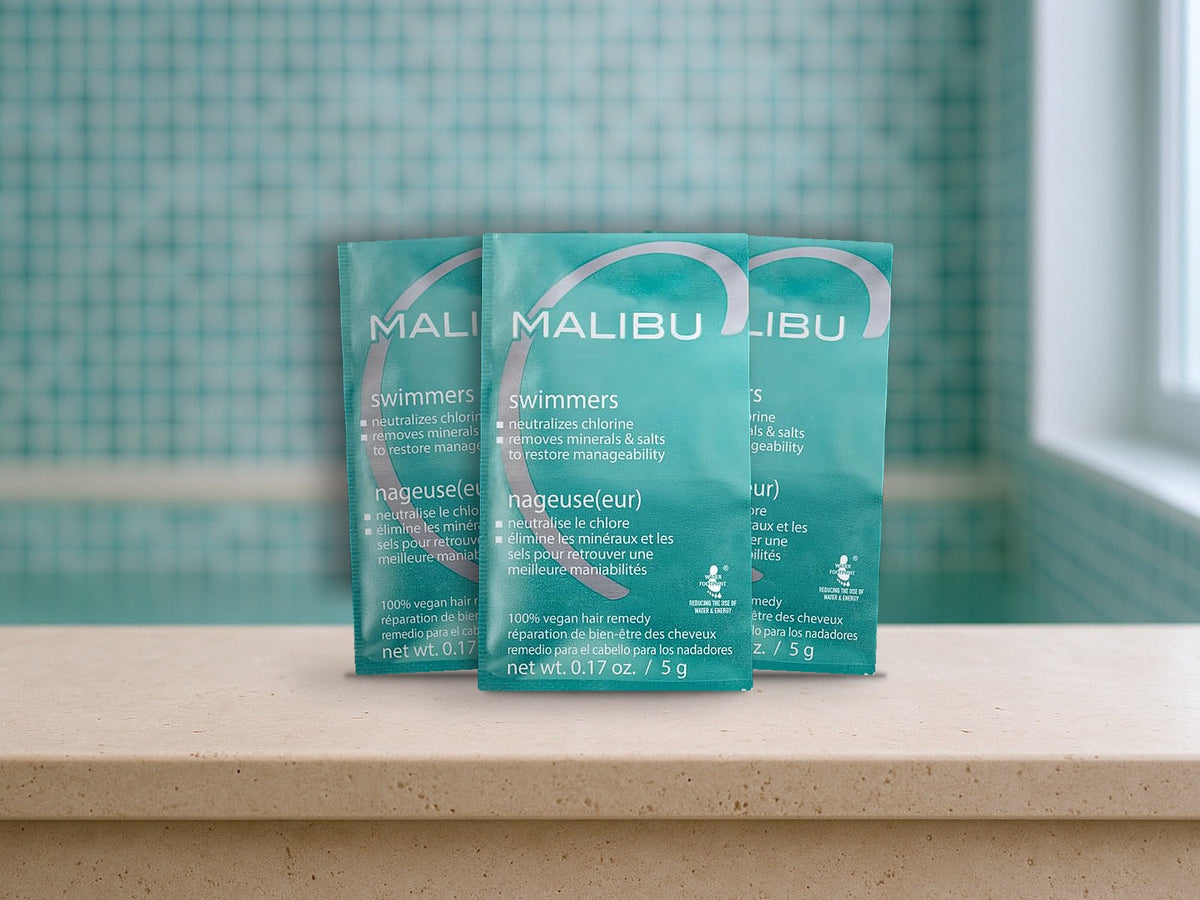
Rinse your hair with fresh water as soon as you leave the pool, then wash. Chlorine can strip the natural oils that help hair feel soft, and pool water can leave minerals behind. Green-looking hair on lighter or color-treated hair is usually copper from the water, not chlorine itself. For a periodic reset after swim days, shampoo first, then use a swimmers chelating packet for a few minutes, rinse, shampoo again, and condition. If you want a packet made for that job, Malibu C Swimmers Wellness Remedy (12 Packets) is a crystallized treatment Malibu C says helps neutralize chlorine and remove copper and other pool elements.
What Chlorine and Pool Water Do to Hair
Chlorine is added to pools to keep the water clean. On hair, that same chemistry can be rough. The American Academy of Dermatology notes that chlorine can dissolve hair lipids, the fats that coat the hair shaft and offer protection, which leaves hair more open to damage and split ends. The Academy also notes that chlorine can break down chemical bonds in hair protein, which can lead to more breakage. Cleveland Clinic dermatologist Taylor Bullock, MD, describes hair that meets chlorine often as dry, rough, dull, and more likely to break.
Most people will not notice much after an occasional swim. Frequent swimmers are more likely to feel the dryness and tangles. That is why a short before-and-after routine matters more than any single product.
Why Hair Turns Green After Swimming
The common myth is that chlorine turns hair green. The research and dermatology guides say otherwise.
- Cleveland Clinic states that minerals in pool water leave behind a green tint, especially on lighter-colored or chemically treated hair, and that chlorine is not what turns hair green.
- The American Academy of Dermatology explains that chlorine works with copper in the water so that copper becomes absorbed by hair, which can leave a green hue on blond hair.
- A 1995 review in Cutis describes green hair as usually due to copper deposited from outside sources such as swimming pool or domestic water, most often in people with blond hair, and lists prior hair damage, frequent chlorinated water, and alkaline shampoos among predisposing factors. Treatments discussed there include edetic acid (EDTA) shampoos and other options.
- A 2024 case report on chlorotrichosis (green hair) in Case Reports in Dermatology describes green discoloration after regular swimming in a teen with light-colored hair. Treatment with an EDTA-containing shampoo led to significant pigmentation improvement within 8 weeks, and the authors note chlorotrichosis is mainly linked to poorly maintained pools with copper exposure.
Malibu C's own FAQ makes the same copper point: green swimmer's hair comes from oxidized copper, and chlorine acts as an oxidizer that can turn copper buildup green, similar to how old pennies turn green. Malibu C says Swimmers Wellness Remedy helps remove the copper and mineral buildup that can lead to that discoloration.
What to Do Before You Swim
Protecting hair starts before you enter the water. Cleveland Clinic and the American Academy of Dermatology both recommend simple prep steps:
- Wet your hair with clean, fresh water first. Cleveland Clinic notes that hair already saturated with clean water absorbs less chlorinated water.
- Add a leave-in conditioner or a light hair oil. Both Cleveland Clinic and the Academy describe this as a barrier between your strands and the pool.
- Wear a swim cap when you can. A well-fitted cap reduces how much pool water reaches your hair, especially if you swim often or have color-treated hair.
No method blocks chlorine completely. Combining a few of these steps still helps.
What to Do Right After You Swim
Do not leave pool water sitting in your hair for hours.
- Rinse with fresh water right away. Cleveland Clinic says the longer chlorine stays on hair, the more damaging it can be. The American Academy of Dermatology also says to rinse immediately after swimming.
- Wash with a gentle shampoo and follow with conditioner. Cleveland Clinic suggests a clarifying shampoo only on occasion for frequent swimmers, because daily clarifying can dry hair further.
- Deep condition about once a week if you swim often, to put moisture back.
- Ease up on heat styling and harsh chemical treatments during heavy swim weeks so hair can recover between pool days.
Those habits are the base. A swimmers remedy packet is the occasional deeper reset when residue or a green tint keeps coming back.
How to Use a Swimmers Wellness Remedy Packet
Malibu C designed Malibu C Swimmers Wellness Remedy as a vegan, crystallized vitamin treatment for after swimming. Per Malibu C's brand directions:
- Shampoo and rinse first so the crystals can reach deposits on the hair.
- Pour the crystals across a wet palm, rub your hands together, and add about 1 ounce of water to dissolve them.
- Apply and massage throughout the hair.
- Leave on for 2 to 5 minutes.
- Rinse well, then shampoo again and condition.
Malibu C recommends using the remedy at least once a week, or more often if you swim frequently, and says to use it after swimming once you have shampooed and rinsed. Malibu C also says the formula is safe for color-treated and bleached hair, but is not recommended for white or non-pigmented hair. For severe discoloration or mineral buildup, Malibu C points people to a salon Crystal Gel service.
Malibu C lists these benefits for the remedy: helps remove minerals and salts, neutralizes chlorine, helps reduce discoloration and damage caused by pool chemicals, restores manageability, and helps remove green swimmer's hair. Ingredients on the brand page include glucose, ascorbic acid, disodium EDTA, sodium cocoyl isethionate, and xanthan gum. EDTA is the same class of chelating agent named in the green-hair case report above.
Where a Hard Water Shampoo Fits
Pool residue and hard water minerals feel similar (dull, coated, hard to lather), but they are not the same problem. Hard water is mostly dissolved calcium and magnesium in tap water. Pool issues center on chlorine, copper, and other pool elements. If your home water is hard and your hair still feels coated on non-swim days, see How to Remove Mineral Buildup From Hair: Hard Water Treatment Steps and Best Shampoo for Hard Water: Clear Residue, Soft Feel.
After a swimmers packet, you still need a regular shampoo and conditioner. We carry Malibu C Hard Water Wellness Shampoo (3.4 fl oz), a chelating shampoo for mineral-heavy water. Use it as a gentle wash step on swim days or hard water days when a full packet reset is not needed. For how often to use chelating products without overdoing them, read How Often Should You Use a Chelating Shampoo? A Simple Schedule. For the difference between chelating and clarifying, see Chelating vs Clarifying Shampoo: Which Reset Does Hair Need?.
A Simple Swim-Week Routine
Use this as a starting point and adjust to how often you swim:
- Every swim: wet hair with fresh water before you enter, rinse right after, wash, and condition.
- Once a week (or after a heavy swim block): do the Swimmers Wellness Remedy packet steps above.
- Between swim days: stick to a mild shampoo. Save clarifying or chelating washes for when hair feels coated again.
- If a green tint shows up on lighter hair: run the swimmers packet after shampooing, then condition. Give it more than one session if needed. In the 2024 case report, the green tint improved over about 8 weeks of regular EDTA shampoo use.
Browse more options in Haircare and Beauty.
Saltwater Pools and Ocean Swims
Malibu C says Swimmers Wellness Remedy can also help with saltwater damage by removing salt and other buildup so hair is less dry, rough, or hard to manage. The same after-swim habits still apply: rinse with fresh water as soon as you can, wash, and condition. Use the packet when hair feels coated after a stretch of saltwater swims, the same way you would after chlorinated pool days.
When to See a Professional
Talk with a dermatologist if your scalp is painful, itchy, or flaking, if hair is breaking in large amounts, or if discoloration does not improve after consistent care. Green hair from copper is usually a cosmetic look, but a clinician can rule out other causes. If you have a sensitive scalp, also see Fragrance-Free Shampoo for Sensitive Scalps: A Buyer's Checklist.
FAQ
How do I get chlorine out of my hair fast?
Rinse with fresh water as soon as you leave the pool, then shampoo and condition. That is the fastest first step. A swimmers chelating packet is for a deeper reset when residue or a green tint keeps returning, not a substitute for an immediate rinse.
Does chlorine turn hair green?
Usually no. Cleveland Clinic, the American Academy of Dermatology, and dermatology case reports point to copper in pool or tap water. Chlorine can oxidize that copper so it shows as a green tint, especially on lighter or damaged hair.
How long should I leave a swimmers remedy on my hair?
Malibu C's directions for Swimmers Wellness Remedy say 2 to 5 minutes after you dissolve the crystals and massage them through wet, shampooed hair.
Can I use a swimmers remedy on color-treated hair?
Malibu C says Swimmers Wellness Remedy is safe for color-treated and bleached hair. Malibu C does not recommend it for white or non-pigmented hair.
How often should I use a swimmers hair treatment?
Malibu C suggests at least once a week, or more often if you swim a lot. Pair that with the rinse-and-wash habit after every swim so you are not relying on packets alone.
Is a swimmers remedy the same as a hard water treatment?
No. Both can use chelating ingredients, but swimmers formulas target chlorine, copper, and pool elements, while hard water treatments target calcium and magnesium from tap water. See Best Shampoo for Chlorine Hair: Clear Pool Residue, Soft Feel for a side-by-side product match, and How to Remove Mineral Buildup From Hair: Hard Water Treatment Steps for tap-water minerals.
Find more hair guides in the Learning Center.
Disclaimer
Pure Supply Shop shares this guide as general hair care information. It is not medical advice. It does not diagnose, treat, cure, or prevent any disease or scalp condition. Product directions and formulas can change, so follow the label on your own package. Individual results vary. Talk with a qualified healthcare professional or dermatologist about scalp symptoms, significant hair breakage, or persistent discoloration, and before changing your hair care routine if you have a medical condition or take medications.


