

Red bumps under your armpit after shaving, a bikini line that itches and burns by the next morning, or deodorant that stings the second it touches your skin are common complaints about shaving these two areas. Both areas fold, rub against clothing, and sweat, so a quick dry pass can leave them red and sore. This guide walks through both areas step by step: which way to move the razor, what to do right after, and what to do if you still get razor burn or bumps.
Shaving your legs? What Causes Strawberry Legs? A Shave and Care Routine for Smoother-Looking Legs has a full leg routine. Still choosing a shave product for reactive skin? Start with Best Shave Cream for Sensitive Skin: When Minimalist Beats Scented.
The Short Answer
Soak the area in warm water for a few minutes, wash off sweat and deodorant, cover the skin with a shave cream, gel, or butter, and shave with light, short strokes using a sharp blade. Go with the direction the hair grows first, rinse the razor after every stroke, and keep extra passes to a minimum. Finish with a cool rinse, pat dry, apply an alcohol-free moisturizer, and give your skin a little time before deodorant or tight clothes. These steps follow shaving advice from the American Academy of Dermatology, and Cleveland Clinic.
Why Your Armpits and Bikini Line Get Razor Burn So Easily
Cleveland Clinic describes razor burn as skin irritation that usually shows up a few minutes after shaving and lasts from a few hours to a few days. It can happen anywhere you shave, including the armpits and pubic area. The usual causes are shaving dry, shaving too fast, using a dull blade, and shaving against the direction of hair growth. Cleveland Clinic explains that razor burn looks like a blotchy or streaky red rash, while razor bumps from ingrown hairs look more like small pimples.
Ingrown hairs happen when a cut hair grows back into the skin. Cleveland Clinic lists the armpits and the pubic area, including the bikini line and inner thigh, among the places most likely to get them. Curly or coarse hair and friction from tight clothing make them more likely.
Nicks are common too. In a 2017 national survey of U.S. adults published in JAMA Dermatology, about 1 in 4 people who groomed their pubic hair said they had been injured while grooming at some point. Cuts were the most common injury, followed by burns and rashes, and women reported injuries a little more often than men. People who frequently removed all of their pubic hair had higher odds of getting hurt.
What You Need Before You Start
- A sharp razor. The American Academy of Dermatology suggests changing the blade or tossing a disposable razor after 5 to 7 shaves. Swap sooner if it tugs, feels rough, or leaves you itchier than usual.
- A cushion between the blade and your skin, such as shave cream, gel, or a shave butter. Cleveland Clinic notes that soap and water usually are not enough and can dry out the skin.
- Small scissors or a trimmer if the hair is long, especially for the bikini line.
How to Shave Your Underarms Step by Step
- Soak first. A few minutes of warm water in the shower or bath softens the skin and hair. Cleveland Clinic and the American Academy of Dermatology both point to right after a shower as a good time to shave.
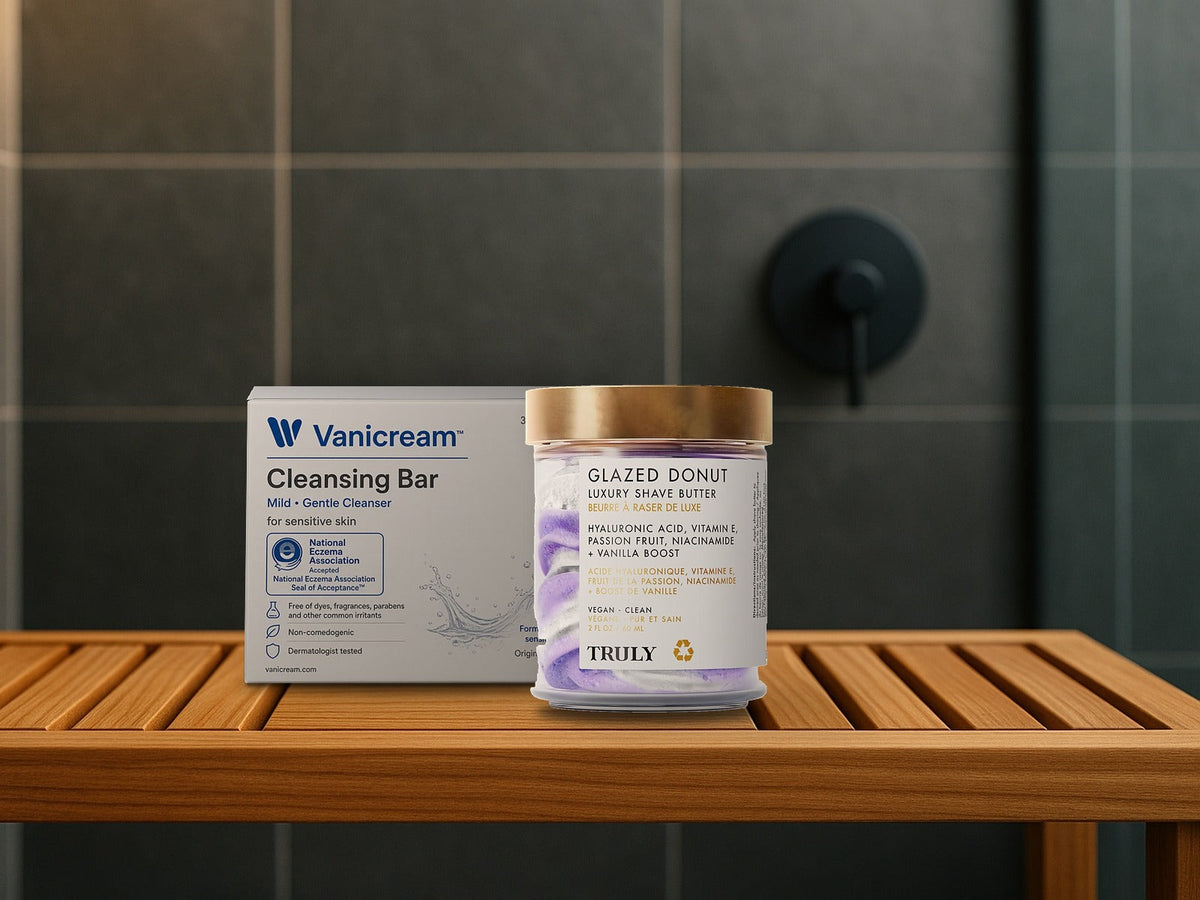
- Wash the area. Clean off sweat and deodorant, which can clog the blade. A mild, fragrance-free bar such as the Vanicream Cleansing Bar 3.9 oz works for this.
- Apply your shave cream, gel, or butter in an even layer over the whole hollow.
- Lift your arm overhead to flatten the area. If you get bumps easily, Cleveland Clinic advises against pulling the skin tight to chase an extra close shave.
- Shave with short, light strokes. Let the blade do the work instead of pressing.
- Rinse the razor after every stroke so hair and lather do not build up between the blades.
- Rinse the area with cool water, pat dry with a clean towel, and apply an alcohol-free moisturizer.
- Wait before deodorant. Freshly shaved skin can sting, so give it some time first.
Which Way Do You Shave Your Armpits?
Underarm hair often grows in more than one direction, so a single direction can miss some hairs. Dermatology guidance from the American Academy of Dermatology and Cleveland Clinic favors shaving with the direction of growth first to lower the chance of razor bumps and burn. A practical middle ground: shave with the hair in each part of the hollow first, then reapply lather before any second pass in another direction, and keep repeat passes to a minimum.
How to Shave Your Bikini Line Step by Step
- Trim long hair first with small scissors or a bikini trimmer, so the razor is not dragging through length.
- Soak for a few minutes in a warm shower or bath so the skin and hair soften.
- Exfoliate gently if your skin tolerates it. Cleveland Clinic says exfoliating before shaving helps clear dead skin. Keep it light, since Cleveland Clinic also cautions that exfoliation can cause inflammation.
- Apply a generous layer of shave cream, gel, or butter, and keep it on the outer skin of the bikini line. Reapply if it rinses away.
- Shave with light, steady strokes in the direction the hair grows. A sharp blade needs very little pressure.
- If you want it closer, add more lather and make a careful pass against the grain. Cleveland Clinic notes this gives the smoothest result but raises the risk of ingrown hairs and irritation, so skip it if you are prone to bumps.
- Rinse with cool water, or hold a cold washcloth on the skin for a minute or two, then pat dry.
- Moisturize both sides of the bikini line with an alcohol-free lotion or oil, and wear loose underwear afterward. Cleveland Clinic suggests avoiding tight clothing and underwear after shaving.
Where Shave Butter and a Gentle Cleansing Bar Fit
Shave butter is a thick, whipped alternative to foam. Truly describes Truly Beauty Glazed Donut Shave Butter as softening hair for glide and creating a buttery moisture barrier while you shave. Its published ingredients include shea butter, coconut oil, glycerin, niacinamide, and vitamin E. Truly's directions are to apply it to the area before shaving, lather it with warm water, shave with the grain, rinse, and pat dry. Because the layer is rich, work in small sections so you can see where you have already shaved.
Glazed Donut is vanilla scented and lists fragrance in its ingredients, so patch-test a small spot first and keep it on the outer skin of the bikini line. If scented products tend to bother you, a fragrance-free shave cream may suit you better. Best Shave Cream for Sensitive Skin: When Minimalist Beats Scented walks through that choice, and Why Use Shave Butter? A Smoother, More Comfortable Shave for Women explains how butters compare with foam.
For the wash step, Vanicream describes its Cleansing Bar as a mild, gentle bar for daily use on the face, hands, and body. Vanicream says most of its surfactants are non-soap surfactants and that the bar has no botanical extracts or essential oils. Its published ingredient list includes no fragrance. To learn how a cleansing bar differs from regular soap, read Cleansing Bar vs Soap: What Is the Difference for Sensitive Skin?
After You Shave: Deodorant, Clothes, and Sun
- Deodorant: wait a while before you apply it. If you often get ingrown hairs under your arms, Cleveland Clinic notes that solid antiperspirants or deodorants can block pores, so a formula that is not a solid may be worth trying.
- Clothes: loose layers over freshly shaved skin cut down on rubbing. Cleveland Clinic lists friction from tight clothing as a factor in ingrown hairs.
- Sun: a Cleveland Clinic dermatologist notes that shaving makes skin more sensitive to the sun. If freshly shaved skin will be out in the sun, use a broad-spectrum sunscreen with SPF 30 or higher.
Red Bumps, Itching, or Burning After Shaving? What to Do
- Red, stinging, or burning skin. Give the area a break from the razor until it settles. Cleveland Clinic suggests a cool washcloth and a moisturizer without fragrance or alcohol.
- Small bumps, sometimes with a hair under the skin. Do not pick or dig at them. NYU Langone dermatologist Nada Elbuluk, MD, warns that poking or tweezing can bring in bacteria and make things worse, and advises waiting until razor bumps clear before shaving the area again. She also suggests shaving less often and not too close to the skin.
- Darker underarm skin. Cleveland Clinic lists shaving irritation, friction, and fragrances and dyes in deodorants and shaving products among possible causes, along with health conditions a doctor should rule out, so talk with a doctor before trying to lighten them at home.
- Signs that need a professional. Cleveland Clinic says to see a healthcare provider for warmth, pus, pain or swelling that gets worse, or redness that spreads. In the bikini area, see a provider for fluid-filled blisters or sores, or anything that does not clear within a few days.
If Shaving Keeps Irritating Your Skin
Trimming instead of shaving close leaves a little length and skips the blade on the skin. NYU Langone notes that hair removal creams or clippers can sometimes mean fewer ingrown hairs than a blade razor. Waxing is covered in the FAQ below. Laser hair removal is another route to discuss with a doctor who has experience with it.
Browse body care basics in Bodycare and Beauty.
FAQ
Why do I get red bumps under my arms after shaving?
Usually it is razor burn, ingrown hairs, or both. Cleveland Clinic lists dry shaving, rushing, dull blades, and shaving against the grain as common causes of razor burn, and the armpits are one of the most common spots for ingrown hairs. Soaking first, a sharp blade, plenty of lather, and fewer passes all help.
How long does razor burn last on the bikini line?
Cleveland Clinic says razor burn usually lasts from a few hours to a few days and clears on its own. Skip shaving the area until it calms down. If it does not improve within a few days or looks infected, see a healthcare provider.
How long should I wait to put on deodorant after shaving?
There is no set number of minutes. Give freshly shaved skin a little time to settle first, since deodorant can sting on it.
Can I use shave butter on my bikini area?
Truly's directions say to apply its shave butter to the area you plan to shave. Glazed Donut contains fragrance, so patch-test it on a small spot along the bikini line first and keep it on the outer skin.
Is it better to shave or wax the bikini line?
It depends on your skin. In the JAMA Dermatology survey, women who waxed had lower odds of repeated grooming injuries than those who used non-electric blades, and Cleveland Clinic suggests waxing for people who get razor burn often.
Find more skin and body care guides in the Learning Center.
Disclaimer
Pure Supply Shop shares this guide as general skin care information. It is not medical advice. Shave butters and cleansing bars are cosmetic products for cleansing and for how skin looks and feels, and they are not intended to diagnose, treat, cure, or prevent any disease or skin condition. Patch-test new products, follow the directions on each label, and keep shave products on the outer skin. Talk with a healthcare professional or dermatologist if you have pain, swelling, pus, a rash that spreads, open skin, darkening skin, blisters or sores, or a diagnosed skin condition. Ingredients and formulas can change, so check the product label. Individual results vary.


