

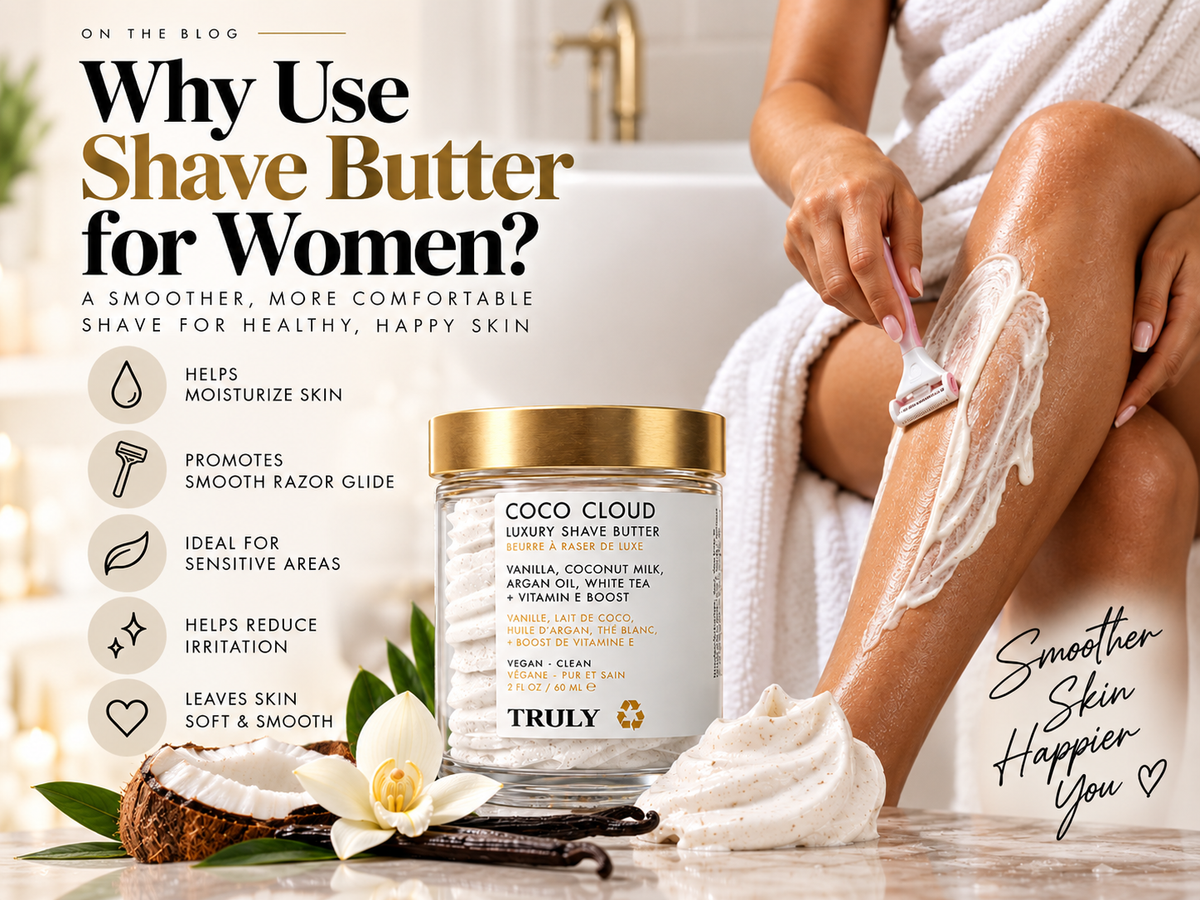
Why Shave Butter for Women Beats Traditional Shaving Cream
If you've noticed your skin feels tight or irritated after shaving, you're not alone. The problem isn't always your technique. Often, it's the shaving product itself.
Traditional shaving creams work fine in a pinch, but they tend to leave skin feeling stripped and dry. Shave butter offers something different. It's a richer, creamier alternative that actually nourishes your skin while you shave, turning a basic grooming task into something that feels more like skincare.
What Exactly Is Shave Butter?
Shave butter is a thick, creamy shaving product that sits between your skin and razor blade. Unlike airy foams and gels that disappear quickly, shave butter maintains a protective layer throughout your shave.
The consistency is the key difference. Where traditional shaving cream might be light and fluffy, shave butter is dense and nourishing. This thickness does two things at once: it softens your hair to make shaving easier, and it lubricates your skin so the razor moves smoothly without dragging or pulling.
Real Benefits You'll Actually Notice
Smoother Razor Glide
Friction is the enemy of a good shave. When your razor drags across skin instead of gliding, you get more irritation and a less close shave. Shave butter creates a slick surface that lets your blade move effortlessly. You'll notice the difference immediately, especially if you've been using foam.
Your Skin Won't Feel Dry Afterward
Shaving naturally removes some of your skin's protective oils along with the hair. That tight, uncomfortable feeling you get after shaving? That's your skin becoming dehydrated. Shave butter counteracts this with built-in moisturizing ingredients. Your skin feels softer and more hydrated when you're done, not stripped and raw.
Sensitive Areas Get Extra Protection
The bikini line, underarms, and other delicate areas are prone to irritation. These zones have thinner, more sensitive skin that needs extra care. A rich shaving lubricant plus a gentle technique creates a cushion between your razor and skin, minimizing unnecessary friction. The result is less redness and fewer ingrown hairs.
You Actually Get a Closer Shave
Since shave butter softens hair and provides better blade glide, you achieve a smoother shave without repeatedly going over the same spots. This single-pass approach means less irritation overall.
It Turns Shaving Into a Pampering Experience
Shaving doesn't have to feel like a chore. Whipped shave butters bring together practical shaving performance with the luxurious textures and rich ingredients you'd find in a premium body care product. Your shower routine becomes a little bit nicer.
Shave Butter vs. Traditional Shaving Cream
Both products serve the same basic purpose, but they work in completely different ways. Understanding the differences will help you decide which is right for you.
Texture and Consistency
Traditional shaving creams are designed to produce a thick lather or foam. They're typically light, airy, and spread easily across your skin. You apply a small amount and it expands as you work it in, covering a large area quickly.
Shave butter, by contrast, is thick and creamy from the start. It doesn't foam up. Instead, it creates a dense, protective layer that stays in place while you shave. This heavier texture is intentional, not a sign of poor quality.
How Long They Last
Shaving cream lather doesn't stick around. It dries out within a minute or two, especially if you're shaving a larger area like your legs. This means you might need to reapply partway through your shave if you're working on multiple spots.
Shave butter maintains its protective layer throughout your entire shave. It stays where you put it, so you don't need to reapply unless you're working on a very large area.
Moisturizing Power
Traditional shaving creams focus on creating lather and lubrication. They often contain ingredients that help with glide, but many contain alcohols and other ingredients that can dry out your skin.
Shave butter is formulated with hydrating and nourishing ingredients like plant oils, butters, and emollients. These actively moisturize while you shave instead of stripping moisture away. Your skin feels softer and more conditioned after using shave butter.
How It Feels on Sensitive Skin
Shaving cream's lighter formula can work fine on normal skin, but it doesn't provide much cushioning for sensitive areas. If you have a tendency toward irritation or razor burn, shaving cream might not protect your skin enough.
Shave butter's richer formula creates a thicker barrier between your razor and skin. This extra cushioning is especially helpful for delicate areas like the bikini line, underarms, and inner thighs where skin is thinner and more reactive.
Ease of Rinsing
Shaving cream washes away easily and quickly since it's not designed to be as moisturizing. This can be convenient if you're in a rush.
Shave butter takes a bit longer to rinse because it's formulated to have more staying power. That said, it still rinses away completely with warm water. The extra rinse time is a small trade-off for the moisturizing benefits.
The Bottom Line
If your skin tends to feel dry, tight, or irritated after shaving, shave butter is likely the better choice. The moisturizing formula and extra cushioning make a real difference. Women with sensitive skin usually notice improvement within one or two uses.
If your skin tolerates shaving cream well and you don't experience dryness, either product will work. Some people genuinely prefer the feeling and smell of traditional foam. The best choice depends on your individual skin type and what your skin needs. That said, most women who try shave butter switch over permanently once they experience the difference.
How to Get the Best Results With Shave Butter
Start with warm water to soften your hair and open your pores. This small step makes everything easier.
Apply an even layer of shave butter to the area you're shaving. You don't need a lot, just enough to create a protective barrier. Use a clean, sharp razor and take gentle strokes in the direction of hair growth when possible.
Rinse your razor frequently as you go. This prevents buildup and keeps the blade working properly. Avoid shaving the same area multiple times in one session, since repeated passes can cause irritation.
After you're finished, rinse with cool water to close your pores and follow up with a moisturizer or body oil. This combination locks in hydration and keeps your skin feeling soft for hours.
What to Look for When Choosing a Shave Butter
The best shave butters balance two things: good razor glide and moisturizing power. Look for formulas that include ingredients known for hydration and skin conditioning.
Coconut milk, plant butters like mango and shea, argan oil, vitamin E, and botanical extracts are common in quality shave butters. These ingredients do more than feel nice. They actively nourish your skin while you shave.
A whipped texture is usually a sign of a good formulation. It indicates the product is rich enough to do the job while still being easy to spread and rinse away. Some products add white tea or vanilla for a spa-like experience.
Time to Upgrade Your Shaving Routine
Your shaving product matters more than you might think. Small choices add up to real differences in how your skin looks and feels.
If you're dealing with dry, irritated skin after shaving, or if you want a more comfortable experience when shaving your legs, underarms, or bikini line, switching from foam to shave butter could be exactly what your routine needs. It's not a revolutionary product, but it's a practical upgrade that makes every shave better.
Try it once, and you'll probably notice why so many women make the switch.


