

Hair that feels like straw after washing, a waxy coating that shampoo will not budge, or blonde that keeps turning brassy at home are some of the most common signs of mineral buildup from hard water. The usual fix is a simple chelating reset plus a few habits that keep the film away. This guide walks through it from start to finish: how to tell whether minerals are the cause, how to remove mineral buildup from hair with a treatment packet, what to expect afterward, and what to try if hair still feels coated.
Already know it is minerals and want a repeat schedule? Read How Often Should You Use a Chelating Shampoo? A Simple Schedule. Not sure whether the film is minerals or styling product? Start with Chelating vs Clarifying Shampoo: Which Reset Does Hair Need?.
The Short Answer
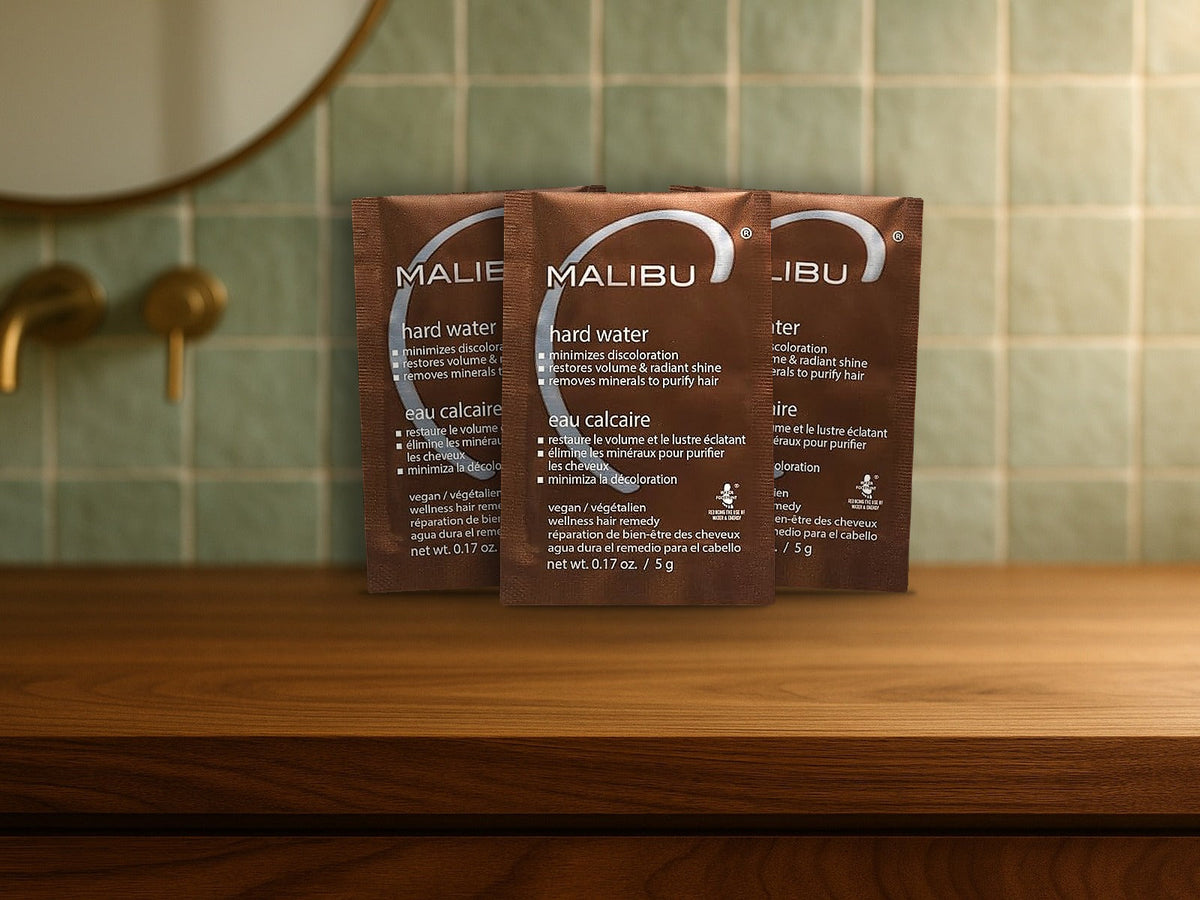
Shampoo first, apply a chelating treatment for the time the label allows, rinse, shampoo again, and condition. With Malibu C Hard Water Wellness Remedy, the brand directions call for dissolving one packet of crystals in wet hands and leaving it on hair for up to 5 minutes. After that first reset, a gentle chelating shampoo on regular wash days and a repeat treatment about once a week help keep the coating from building back up.
Everyday shampoo usually does not lift mineral deposits well. Chelating ingredients bind metal ions such as calcium, magnesium, and copper so they rinse away. Malibu C lists vitamin C (ascorbic acid), disodium EDTA, and sodium gluconate in its Hard Water Wellness Remedy, and EDTA is a well-known chelating agent.
Is It Mineral Buildup? Signs Your Hair Has Hard Water Residue
Malibu C describes the usual signs as dull, rough, or straw-like texture, extra tangling, a waxy or filmy residue, brassy or discolored tones, and shampoo that does not lather well. Hair that feels better after a trip to a softer water area is another clue.
The U.S. Geological Survey explains that hard water is mostly dissolved calcium and magnesium, which react with soap to form soap scum and leave scale and cloudy spots around the house. USGS uses these general ranges, in milligrams per liter of calcium carbonate: 0 to 60 is soft, 61 to 120 is moderately hard, 121 to 180 is hard, and more than 180 is very hard.
To check your water, look at your utility's annual drinking water quality report, which the U.S. Environmental Protection Agency calls a Consumer Confidence Report. If you are on a private well, you will not receive that report, so a home water hardness test kit is the easier route.
Color-treated and bleached hair can pick up more minerals. In a University of Cincinnati doctoral study of water hardness and human hair, the condition of the hair mattered more than the hardness level, and chemically treated hair took up notable amounts of calcium and magnesium even with repeated exposure to softer water.
How to Remove Mineral Buildup From Hair: Step by Step
These steps follow the Malibu C directions for Malibu C Hard Water Wellness Remedy (12 Packets). Check the package you own, since directions can change.
- Shampoo and rinse. Malibu C recommends shampooing first so surface oil and product residue are out of the way and the crystals can reach the mineral deposits.
- Gently squeeze out extra water so the treatment does not run straight off.
- Activate the crystals. Open one packet, pour the crystals across a wet palm, rub your hands together, and add a little water until the crystals dissolve.
- Apply and scrunch. Work the mixture through your hair from roots to ends. On long or thick hair, apply it in a few sections so the lengths are covered evenly.
- Wait up to 5 minutes. Set a timer and rinse at or before the 5 minute mark.
- Rinse, then shampoo again. Rinse thoroughly, shampoo one more time, and rinse well.
- Condition. Finish with conditioner, then rinse. A mineral reset can leave hair feeling extra clean, and conditioner brings the soft feel back.
If you have white or non-pigmented hair, Malibu C says to shampoo one additional time after the treatment to remove the crystallized vitamins. Each sachet is sealed, which also makes the packets easy to travel with.
What to Expect After the First Treatment
Hair often feels lighter after one session, but years of buildup, or bleached and color-treated hair, may take several regular sessions. Malibu C describes hard water effects on hair as largely reversible with consistent use of a chelating product. Skip doubling up in one day. Follow the label rhythm and give it a few weeks.
The University of Cincinnati research also tested ways to manage minerals in hair. The most effective approach was a two-part plan: first lower mineral levels with a rinse-off chelating treatment that stays on the hair for a few minutes, then use a shampoo that keeps levels down during later washes. For the everyday half of that plan, Malibu C Hard Water Wellness Shampoo (3.4 fl oz) is a gentle chelating shampoo for regular wash days.
Hair Still Feels Coated? What to Try Next
- Waxy or sticky after a heavy styling week. That film may be product residue, which a clarifying shampoo handles better. Chelating vs Clarifying Shampoo: Which Reset Does Hair Need? explains how to tell them apart.
- Dry, squeaky, or tangly after the reset. Use more conditioner, detangle gently, and space your next treatment further out.
- Greenish tint after swimming. Malibu C explains that green swimmer's hair comes from copper that chlorine oxidizes. Malibu C Swimmers Wellness Remedy (12 Packets) is used after swimming, with brand directions of 2 to 5 minutes on hair before rinsing, and the brand does not recommend it for white or non-pigmented hair. For the full swim routine, see Best Shampoo for Chlorine Hair: Clear Pool Residue, Soft Feel.
- Itching, flaking, redness, or shedding. Those are scalp concerns for a dermatologist, not a sign that you need a stronger reset. If fragranced wash products bother your scalp, Fragrance-Free Shampoo for Sensitive Scalps: A Buyer's Checklist covers what to look for.
Do Vinegar or Lemon Rinses Remove Hard Water Buildup?
Rinsing hair with diluted vinegar or lemon juice is a long-standing kitchen remedy, and the University of Cincinnati study notes that acidic rinses can dissolve calcium carbonate deposits. The same research found the best results from a chelating rinse-off treatment followed by a maintenance shampoo, and there is no standard tested vinegar recipe. Acidic rinses can sting, especially on an irritated scalp, so keep them away from your eyes and skip them if your scalp is sore. It is not a substitute for a chelating treatment when the coating keeps coming back.
How to Keep Mineral Buildup From Coming Back
- Use a gentle chelating shampoo on regular wash days if your water is hard.
- Repeat a chelating treatment about once a week. Malibu C suggests at least weekly, or as often as needed based on how hard your water is.
- Condition after every reset, and keep styling products lighter on weeks when buildup returns.
- Look at the water itself. Some homes use a water softener, and some people try shower filters. Filters vary widely, so check what a filter is designed to reduce before buying.
For choosing a shampoo, read Best Shampoo for Hard Water: Clear Residue, Soft Feel. Browse more wash-day options in Haircare and Beauty.
FAQ
How do I know if I have mineral buildup in my hair?
Look for hair that feels coated, waxy, or like straw right after washing, shampoo that will not lather well, and color that turns brassy faster at home than when you travel. Scale on faucets, spotty glasses, and a water report reading above 120 milligrams per liter are strong supporting clues.
How long do you leave a hard water treatment on your hair?
Follow your package. Malibu C Hard Water Wellness Remedy directions say up to 5 minutes, then rinse, shampoo again, and condition. Do not go past the time on the package.
Does hard water damage hair?
Hard water minerals can build up on hair and leave it dull, rough, or coated. In the University of Cincinnati study, hair that was already bleached or color-treated picked up the most minerals. Malibu C describes these effects as largely reversible with consistent use of a chelating product.
Can I use a hard water treatment on color-treated or blonde hair?
Malibu C describes its Hard Water Wellness Remedy as a way to create a cleaner canvas for color and conditioning, and says white or non-pigmented hair needs one extra shampoo afterward. If you have a fresh color service or one coming up, ask your stylist when to schedule your reset.
Find more hair and skin guides in the Learning Center.
Disclaimer
Pure Supply Shop shares this guide as general hair care information. It is not medical advice. The shampoos and hair treatments discussed here are cosmetic products for cleansing and for the look and feel of hair. They are not intended to diagnose, treat, cure, or prevent any disease or scalp condition. Follow the directions on your product package, since formulas and directions can change, and patch-test new products if you have a history of sensitivity. See a dermatologist or healthcare professional for persistent itching, flaking, redness, irritation, or hair shedding. Individual results vary.


