

Strawberry legs are the tiny dark dots that show up on freshly shaved legs and make the skin look a little like the seeded surface of a strawberry. They are common, and dermatologists describe them as harmless. Most of the time they come down to pores and hair follicles, plus a few shave habits that make those dots easier to see.
This guide explains what causes strawberry legs, how to tell them apart from look-alikes such as keratosis pilaris and razor bumps, and a simple shave and care routine for smoother-looking legs. If you are still choosing between a cream and a butter, start with Best Shave Cream for Sensitive Skin: When Minimalist Beats Scented.
Black dots on your legs after shaving and legs that look like they have pores are the classic signs. Red dots after shaving are usually something else, such as razor bumps, and this guide covers those too.
The Short Answer
Strawberry legs usually happen when pores or hair follicles fill with oil, dead skin, and debris. Shaving or waxing exposes those openings, and the oil inside darkens when it meets air, which leaves small dark dots. A dull razor, shaving without a cushion, dry skin, and ingrown hairs can all make the look stronger. Gentle cleansing, a well cushioned shave with a sharp blade, regular exfoliation, and daily moisturizing are the usual first steps. Pain, swelling, itching, or spreading bumps are a reason to see a healthcare professional.
What Strawberry Legs Look Like
Cleveland Clinic describes the typical signs as:
- Black or brown dots on the legs that show up after shaving
- Open pores that look darker than the skin around them, a bit like blackheads
- A pitted or dotted look across the shin or thigh
The dots usually do not itch or hurt. They also tend to be easier to see on lighter skin and on legs with thicker or darker hair.
What Causes Strawberry Legs?
Strawberry legs is a descriptive name, not one single condition. Several things can produce the same dotted look:
- Clogged pores. Leg pores can fill with oil, dead skin, and debris. Once shaving removes the hair, the oil in the opening is exposed to air, oxidizes, and turns darker.
- Shave habits. A dull or old razor, or shaving without a cream or butter, can irritate the skin and lead to razor burn or ingrown hairs, which can look like strawberry legs.
- Ingrown hairs. Hairs that curl back into the skin after shaving can leave small dark or red spots, especially with thick or coarse hair.
- Folliculitis. An inflamed or infected hair follicle can follow shaving, waxing, heavy sweating, or a hot tub. These bumps are usually red and often itchy.
- Dry skin. Dryness does not cause the dots on its own, but dry legs are easier to irritate with a razor and make every dot more visible.
Strawberry Legs vs Keratosis Pilaris vs Razor Bumps
These three get mixed up all the time. Here is a quick way to tell them apart:
| What you see | Strawberry legs | Keratosis pilaris | Razor bumps |
|---|---|---|---|
| Look | Flat dark dots in pores | Small rough bumps, like goosebumps | Red, raised bumps after shaving |
| Feel | Mostly smooth | Rough, like sandpaper | Tender or itchy |
| Where | Legs, often right after shaving | Upper arms, thighs, buttocks | Anywhere you shave |
| Main driver | Clogged pores exposed by hair removal | Keratin and dead skin plugging follicles | Irritation and hairs growing back into the skin |
| First step | Gentle cleansing, a better shave, exfoliation | Moisturizing and gentle exfoliation | Fewer passes, a sharp blade, rest days |
The American Academy of Dermatology describes keratosis pilaris as dead skin cells clogging hair follicles, which creates rough, dry patches. It often gets worse in dry winter air. If you are not sure which one you have, a dermatologist can tell by looking at the skin.
A Shave Routine for Smoother-Looking Legs
Most of the dotted look you can influence starts in the shower. This routine follows the steps dermatologists commonly suggest for strawberry legs:
- Shave at the end of your shower. Warm water softens the hair, and by then your legs are clean of extra oil and dead skin that can clog the blade.
- Wash first with something gentle. A soap-free, fragrance-free bar or wash cleans the skin without leaving it tight. If you want the difference explained, see Cleansing Bar vs Soap: What Is the Difference for Sensitive Skin?
- Never shave dry. Spread an even layer of shave cream or shave butter so the blade glides instead of dragging.
- Use a sharp, clean razor. Cleveland Clinic dermatologist Matthew Janik, MD, suggests changing the blade, or tossing a disposable razor, after about six shaves. Store it somewhere cool and dry instead of leaving it in the shower.
- Shave with the grain. Go in the direction of hair growth with short, light strokes, and rinse the blade often.
- Avoid repeat passes. If you need a second pass, add more cushion first.
- Rinse, pat dry, and moisturize. A moisturizer that is free of fragrance and dyes is the safest choice for irritated legs.
For more on why a butter feels different from foam, read Why Use Shave Butter? A Smoother, More Comfortable Shave for Women.
Exfoliate and Moisturize Between Shaves
Exfoliating removes the dead skin that helps plug pores, and it makes it easier for new hairs to grow out instead of curling under. Keep it gentle:
- Use a clean washcloth, a loofah, or a mild body scrub with light pressure, a few times a week. Hard scrubbing can irritate skin and make the dots look worse.
- Chemical exfoliants such as alpha hydroxy acids, glycolic acid, lactic acid, and salicylic acid are common next steps. Dermatologists may recommend them when scrubbing irritates the skin.
- Many exfoliating acids make skin more sensitive to the sun, so use sunscreen on legs that will be outdoors.
- Moisturize every day, ideally right after you towel off. Hydrated skin is easier to shave smoothly and shows dots less.
Where Each Product Fits
No product removes strawberry legs on its own. The routine does the work. These are the steps we carry for it:
- Wash: Vanicream Cleansing Bar 3.9 oz. Vanicream makes this soap-free bar without dyes, fragrance, or lanolin, and it works on face and body.
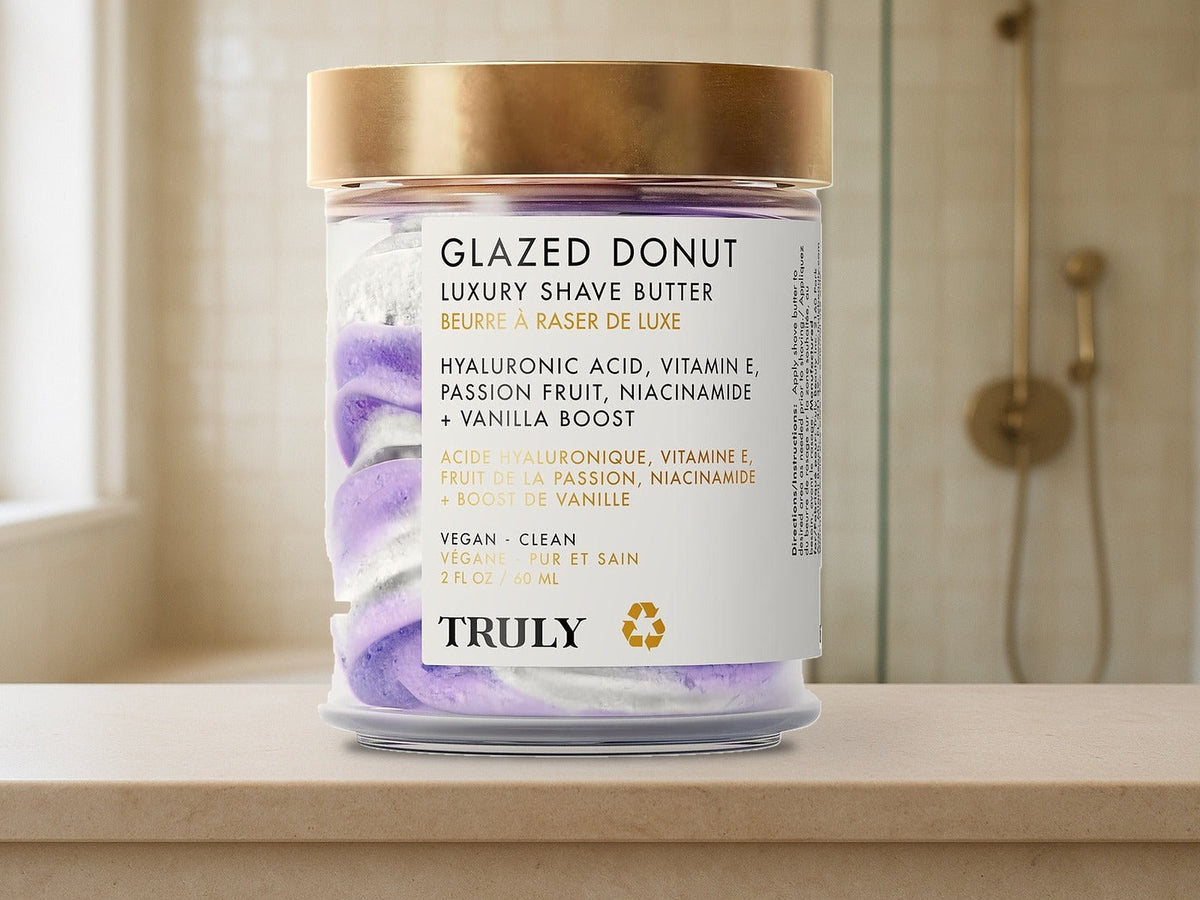
- Shave cushion: Truly Beauty Glazed Donut Shave Butter. A whipped butter that cushions the blade. The jar lists hyaluronic acid, vitamin E, passion fruit, niacinamide, and a vanilla boost. It is scented, so patch-test first if fragrance tends to bother your skin.
- After the shower: Truly Beauty Jelly Booster Serum. Truly describes this jelly body serum, made with pomegranate extract and vitamin B12, as a way to improve the look of dark spots and uneven tone on the legs, arms, bikini line, and underarms. Truly suggests 4 to 5 drops after showering, rubbed in until absorbed before you dress. It contains fragrance and colorants, so skip it on broken or irritated skin, and use sunscreen on exposed legs.
If you want both aftercare textures explained side by side, see Jelly Booster vs After-Shave Oil: Glow Serum or Glazed Finish? Browse more in Beauty and Skincare.
Other Hair Removal Options
If shaving keeps bringing the dots back, other hair removal methods are worth a look:
- Epilator. A handheld device that pulls hair from the root. It stings a bit, but you use it every two to three weeks.
- Laser hair removal or electrolysis. These target the follicle and suit thick, coarse, or curly hair. They take several sessions, cost more, and should be done by a trained professional.
- Waxing. Lasts longer than shaving, though it also exposes pores and can still trigger folliculitis in some people.
When to See a Healthcare Professional
Book a visit if the bumps hurt, swell, itch a lot, fill with pus, spread, or come with a fever. A clinician can also check for folliculitis, keratosis pilaris, or another skin condition if home care has not helped after a few weeks, and can talk through prescription options.
FAQ
Are strawberry legs permanent?
Usually not. Because they mostly come from clogged pores and shave irritation, a gentler shave routine with regular exfoliation and moisturizing often makes them less noticeable over time. Dots can come back if the habits that caused them return.
Does shaving cause strawberry legs?
Shaving does not create the clogged pores, but it exposes them and can add irritation. A dull blade, dry shaving, and repeat passes make the look stronger.
Are strawberry legs the same as keratosis pilaris?
No. Strawberry legs are mostly flat dark dots in pores. Keratosis pilaris is rough, raised bumps caused by keratin plugging follicles. They can show up together, and a dermatologist can tell them apart.
Can a shave butter help with strawberry legs?
A shave butter or cream gives the razor a cushion, which can cut down on the razor burn and drag that make dots stand out. It does not unclog pores, so pair it with cleansing, exfoliation, and moisturizing.
Should I shave against the grain for a closer shave?
Shaving against the grain can give a closer result, but it also raises the chance of irritation and ingrown hairs. If you are prone to strawberry legs, shave with the grain.
Can I use Jelly Booster right after shaving?
Truly suggests applying it after showering. If freshly shaved skin stings or looks irritated, wait until it settles, patch-test first, and skip any broken skin.
What are the red dots on my legs after I shave?
Red dots after shaving are often razor bumps, razor burn, or ingrown hairs. Cleveland Clinic notes that folliculitis, an inflamed hair follicle, can also follow shaving and usually looks red and itchy. Dark dots in the pores are more typical of strawberry legs. If red bumps are painful, itchy, filled with pus, or spreading, see a healthcare professional.
Why do I have black dots on my legs?
Black or brown dots on the legs are often pores or hair follicles filled with oil and dead skin that darken when exposed to air, which is what Cleveland Clinic describes as strawberry legs.
Why do my legs look like they have pores after shaving?
Your legs do have pores and hair follicles. Shaving removes the hair that covers them, so openings that are clogged or darkened become easier to see, especially on lighter skin or with darker hair.
How do I get rid of dots on my legs after shaving?
Dermatologists commonly suggest gentle cleansing, shaving at the end of a warm shower with a sharp blade and a cream or butter, shaving with the grain, gentle exfoliation a few times a week, and daily moisturizing. Results take time. If home care has not helped after a few weeks, a dermatologist can talk through other options.
Why do I get bumps on my legs after shaving?
Bumps after shaving usually come from irritation, ingrown hairs, or folliculitis. Rough, dry bumps that are there whether you shave or not may be keratosis pilaris, which the American Academy of Dermatology describes as dead skin cells clogging hair follicles. If bumps itch a lot, hurt, or spread, check with a healthcare professional.
Find more guides in the Learning Center.
Disclaimer
Pure Supply Shop shares this guide as general skin care information. It is not medical advice. Shave butters, cleansing bars, and body serums are cosmetic products for how skin looks and feels, and they are not intended to diagnose, treat, cure, or prevent any disease or skin condition. Patch-test new products and follow the directions on each label. Talk with a healthcare professional or dermatologist if you have pain, swelling, pus, a rash that spreads, open skin, a diagnosed skin condition, or if you are pregnant or nursing. Ingredients and formulas can change, so check the product label. Individual results vary.


