

You pick up a bar at the sink and assume it is soap. Often it is not. Many bars sold for sensitive skin are cleansing bars, sometimes called syndet bars, and they are built differently from the classic soap bar. If your face or body feels tight, squeaky, or itchy after washing with an old-school bar, that difference may matter more than the shape.
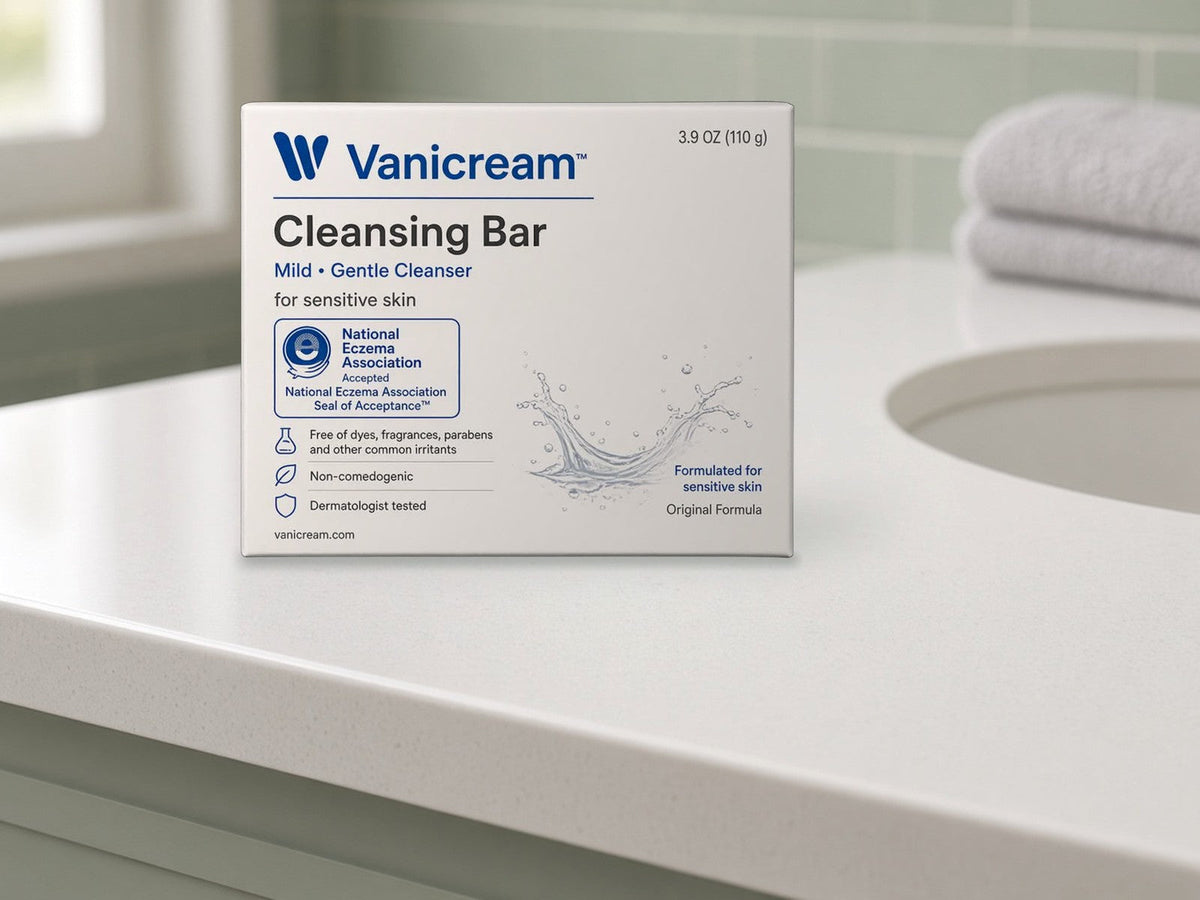
This Learning Center guide explains the real difference between a cleansing bar and soap, how to tell which one you are holding, and how to use a gentle bar on face and body. Want to shop first? Start with the Vanicream Cleansing Bar, a mild, fragrance-free bar for face, hands, and body.
Cleansers are for washing and for the look and feel of skin. They are not medicines and are not treatments for eczema, psoriasis, dermatitis, or any other skin condition.
The Short Answer
- True soap is made by reacting fats or oils with an alkali (saponification). The result is alkaline, typically around pH 9 to 10.
- A cleansing bar (syndet bar) uses mostly synthetic, non-soap surfactants such as sodium cocoyl isethionate. These bars are usually formulated much closer to the mildly acidic surface of skin.
- For sensitive-feeling skin, many people find a fragrance-free cleansing bar leaves skin feeling softer and less tight than a traditional soap bar.
Both clean. The difference is how they feel after you rinse, and how much they disturb the skin's surface while they do it.
What Makes Soap "Soap"
Classic soap has been made the same basic way for centuries: fats or oils plus lye. On an ingredient label you will usually see names like sodium tallowate, sodium palmate, sodium cocoate, or sodium laurate. Those are soap molecules.
Soap cleans well and rinses easily, but it has two traits that people with sensitive skin tend to notice:
- It is alkaline. Healthy skin has a slightly acidic surface, often described as roughly pH 4.5 to 5.5. Washing with a high-pH bar can leave skin feeling tight or dry for a while afterward.
- It can react with hard water minerals. In hard water, soap can form a film (the same stuff that makes soap scum on a tub), which some people feel as a squeaky, filmy finish on skin.
Many traditional bars also add fragrance, dyes, and botanical oils. Those extras are a common reason a wash routine feels less comfortable, separate from the soap itself.
What a Cleansing Bar (Syndet Bar) Is
"Syndet" is short for synthetic detergent. A syndet bar swaps most or all of the soap for gentler surfactants, the cleansing ingredients that lift oil and dirt so water can rinse them away. Common ones include sodium cocoyl isethionate, sodium isethionate, and sodium lauroyl sarcosinate.
Because these surfactants do not need a high pH to work, a cleansing bar can be formulated closer to the skin's own surface. Many also add moisturizing ingredients such as stearic acid, fatty alcohols, or petrolatum so skin feels less stripped after rinsing.
Some bars are a blend, called "combars": mostly syndet with a little soap mixed in for lather and bar firmness. That is normal and still very different from a pure soap bar.
Cleansing Bar vs Soap: Side by Side
| Factor | Traditional soap bar | Cleansing (syndet) bar |
|---|---|---|
| Main cleansers | Soap made from fats plus lye | Mostly non-soap surfactants |
| Typical pH | Alkaline, around 9 to 10 | Closer to neutral or mildly acidic |
| After-rinse feel | Often squeaky or tight | Often softer, less tight |
| Hard water | Can leave a filmy residue | Less prone to soap scum film |
| Label clues | Sodium tallowate, palmate, cocoate | Sodium cocoyl isethionate, "soap-free," "cleansing bar" |
| Good fit for | People who like a classic bar and tolerate it well | Sensitive-feeling, dry, or easily irritated skin |
How to Tell What You Are Holding
- Read the front. Words like "cleansing bar," "beauty bar," "soap-free," or "non-soap cleanser" point to a syndet or blended bar. In the US, a product labeled only as "soap" is often true soap.
- Read the first few ingredients. Sodium cocoyl isethionate near the top means syndet. Sodium tallowate, sodium palmate, or sodium cocoate near the top means soap.
- Check for extras. If your skin is sensitive, look for fragrance-free (not just "unscented"), dye-free, and no essential oils.
Where the Vanicream Cleansing Bar Fits
The Vanicream Cleansing Bar is a mild cleansing bar for daily use on face, hands, and body. Vanicream considers it a cleanser rather than a soap because most of its surfactants are non-soap surfactants, led by sodium cocoyl isethionate. The formula also includes Vanicream's cream base, which the brand says helps skin feel soft and moisturized after rinsing.
One honest label note: the ingredient list includes sodium laurate, a true soap. That is why the brand says "most" surfactants are non-soap. It is a syndet-forward bar, not a classic soap.
- Free of dyes, fragrance, parabens, and lanolin
- No botanical extracts or essential oils
- Non-comedogenic and dermatologist tested
- Gluten-free
- 3.9 oz (110 g) bar
Vanicream also says the bar is a good fit for kids and the whole family. For babies, or for any child with a skin concern, check with your pediatrician first.
How to Use a Cleansing Bar on Face and Body
- Use lukewarm water. Hot water can leave skin feeling drier, whatever cleanser you use.
- Lather in your hands or on a soft cloth instead of dragging the bar across your face.
- Keep it short. Thirty to sixty seconds of gentle massage is plenty for the face.
- Rinse thoroughly until skin no longer feels slippery.
- Pat dry and moisturize while skin is still slightly damp.
Vanicream's own directions are simple: wet, lather, rinse, and pat dry. The brand says the bar can be used daily on face, hands, and body.
Keep the Bar in Good Shape
- Let it drain. A slotted or raised soap dish lets the bar dry between uses, so it lasts longer and does not turn mushy.
- Keep it out of the shower stream. Constant water is the fastest way to waste a bar.
- Rinse before use if the bar sits on a shared counter. Many households simply give each person their own bar.
- Travel tip: a bar is not a liquid, so it skips the carry-on liquid limit. Let it dry fully before packing.
Bar or Liquid? Still Your Call
A cleansing bar is not automatically better than a gentle liquid cleanser. They solve different habits. Bars travel easily and cut down on plastic bottles. Liquids can feel easier to dose and share. For a format-by-format comparison focused on the face, read Best Fragrance-Free Face Cleanser for Sensitive Skin: Bar vs Liquid. Vanicream Gentle Facial Cleanser is a liquid option in that guide and is currently out of stock.
Building a Simple Sensitive-Skin Routine
A quiet cleanser works best inside a short routine: cleanse, moisturize, and protect with sunscreen during the day. Our overview of What Are the 5 Basics of Skincare Everyone Should Know? covers the rest.
If you shave your legs or body in the same shower, wash first, then shave with a cushioning product. Truly Beauty Glazed Donut Shave Butter is a rich shave butter option, and Best Shave Cream for Sensitive Skin: When Minimalist Beats Scented walks through razor comfort for reactive skin.
FAQ
Is a cleansing bar the same as soap?
No. True soap is made from fats and lye and is alkaline. A cleansing bar uses mostly non-soap surfactants and is usually formulated closer to the skin's natural pH.
Is the Vanicream Cleansing Bar a soap?
Vanicream considers it a cleanser, not a soap, because most of its surfactants are non-soap surfactants. It is fragrance-free and dye-free.
Can I use a cleansing bar on my face?
Yes, if it is made for face use. The Vanicream Cleansing Bar is designed for face, hands, and body. Lather in your hands first and rinse well.
Are syndet bars better for dry or sensitive skin?
Many people with dry or sensitive-feeling skin find syndet bars more comfortable than traditional soap because they leave skin feeling less tight. Individual skin varies, so pay attention to how yours feels after a week of use.
How often should I use a cleansing bar?
A gentle cleansing bar can be used daily. If your skin feels dry, try washing your face once a day and rinsing with water only in the morning.
Does a cleansing bar remove makeup and sunscreen?
It can handle light makeup and everyday sunscreen. For heavy or waterproof makeup, many people use a separate makeup remover first, then the bar.
Browse more options in the Skincare collection and Beauty collection, and find more guides in the Learning Center.
Disclaimer
This content is for educational and informational purposes only and is not intended to diagnose, treat, cure, or prevent any disease. Cosmetic cleansers and shave products are for cleansing and the appearance and feel of skin and are not a substitute for professional medical advice, diagnosis, or treatment. If you have a skin condition, a rash that does not clear, or a reaction to any product, stop use and talk with a dermatologist or healthcare professional. Always follow package directions and check the product label for current ingredients. Individual results vary. Pure Supply Shop does not provide medical advice.


