

Pre-workout not working anymore? Maybe the scoop that used to light you up now feels like nothing, or you have started reaching for two scoops just to feel anything. If you take a caffeinated formula most days, caffeine tolerance is the first thing to look at. This guide explains what caffeine tolerance is, what the research says about whether your pre-workout is still helping, why doubling the scoop is a bad fix, and how to take a caffeine break without losing your training rhythm.
Still deciding between formula types? Start with Non-Stim vs Stim Pre-Workout: Pump Feel or Energy Kick?.
The Short Answer
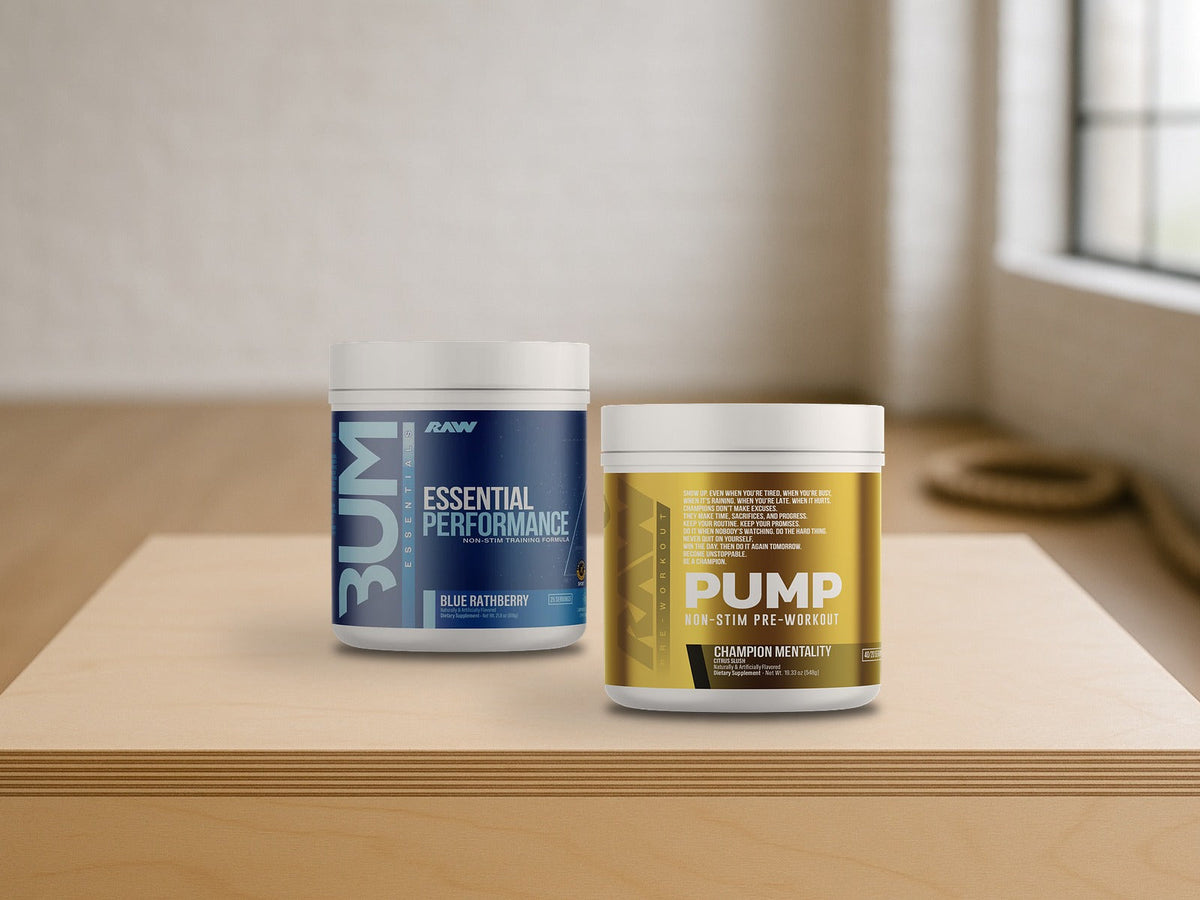
Pre-workout can feel weaker over time, mostly because of the caffeine in stim formulas. In lab studies, daily caffeine use shrank the performance boost over a few weeks. A larger review of 60 studies suggests your caffeine is probably still helping, even when you do not feel the same jolt. Before you add more powder, count your total caffeine for the day, check your timing, and consider a gradual caffeine break. On training days during the break, a non-stim pre-workout lets you keep your routine without caffeine. If you want an easy place to start, RAW Pump Non-Stim Pre-Workout is a zero-caffeine formula built for pump.
Why Your Pre-Workout Feels Weaker Over Time
Caffeine is the active stimulant in a stim pre-workout, and regular use can blunt its effects. Researchers call this tolerance: the same serving produces a smaller effect after regular use.
Two controlled studies tracked this in people who took caffeine every day:
- In a 2019 study in PLoS One, 11 active adults took a moderate caffeine dose (3 milligrams per kilogram of body weight) every day for 20 days and, in a separate phase, a placebo. Caffeine raised peak cycling power by about 4% for the first 15 days, then the boost lessened. The biggest effect showed up on the very first day, and it got progressively smaller after that.
- In a 2017 study in the Journal of Sports Sciences, 18 people who normally drank very little caffeine took a low daily dose for four weeks. Before the four weeks, an acute caffeine dose helped them produce more work in a cycling test. After four weeks of daily caffeine, that benefit was no longer apparent, while the placebo group kept it. The authors suggested that people who usually consume little caffeine skip daily caffeine supplements so they get the most from caffeine when they do use it.
The "kick" you feel can fade too. In a 2010 study in Neuropsychopharmacology with more than 370 adults, regular caffeine consumers felt less alert and had more headaches after about 16 hours without caffeine, and their next dose mostly brought alertness back to normal. The researchers concluded that frequent consumers gain no net alertness benefit: much of the lift they feel is relief from going without.
Is Your Pre-Workout Still Doing Anything?
Probably, at least the caffeine part. The tolerance studies above are small, and other research points the other way.
- A 2022 systematic review and meta-analysis in Sports Medicine pooled 60 caffeine studies that reported how much caffeine people normally consumed. Caffeine improved performance compared with placebo, and how much caffeine people habitually took in did not change the size of that effect, for endurance, power, or strength exercise.
- A 2017 study in the Journal of Applied Physiology split 40 trained cyclists into low, moderate, and high everyday caffeine groups. Caffeine made their time trials faster overall, and their everyday caffeine habit made no clear difference to that benefit.
Put together, the research suggests the benefit may shrink with heavy daily use but is unlikely to disappear completely. The alertness research above suggests the feeling can fade even when some of the performance effect hangs on. A smaller buzz does not automatically mean a wasted serving. Your training log, meaning your reps, loads, and times, tells you more than how wired you feel.
Other Reasons Your Pre-Workout Is Not Hitting
Tolerance is not the whole picture. Before changing anything, check these three things.
1. Your total caffeine has crept up
Coffee, tea, soda, energy drinks, and a stim pre-workout all count toward the same daily total. The FDA lists a typical 12-ounce cup of regular brewed coffee at about 113 to 247 milligrams of caffeine, and a 12-ounce energy drink at about 41 to 246 milligrams. The FDA cites 400 milligrams a day as an amount not generally associated with negative effects for most healthy adults, though sensitivity varies widely. If your morning coffee went from one cup to three, your pre-workout is working against a much bigger daily baseline.
2. Your timing is off
The International Society of Sports Nutrition notes that the most common timing in caffeine research is about 60 minutes before exercise. Your product label may suggest a different lead time, so follow your own label. For a session-by-session timeline, see When to Take Pre-Workout: Timing for Morning, Evening, and Non-Stim.
3. You are comparing it to your first scoop
In the 2019 PLoS One study, caffeine had its biggest effect on the first day of use. If you are measuring every session against the first time you tried a new tub, almost anything will feel weaker by comparison.
Should You Just Take More? Why Doubling the Scoop Backfires
Taking two scoops is a tempting fix for a pre-workout that feels weak, and it is the one to avoid. The International Society of Sports Nutrition says caffeine has consistently improved performance at 3 to 6 milligrams per kilogram of body weight, about 200 to 400 milligrams for a 150-pound adult, and that very high doses (around 9 milligrams per kilogram) bring a high rate of side effects without being needed for a performance benefit. The 2022 Sports Medicine review also found no significant benefit at doses above 6 milligrams per kilogram.
The FDA lists signs of too much caffeine, including increased heart rate, heart palpitations, high blood pressure, trouble sleeping, anxiety, jitters, upset stomach, nausea, and headache. Doubling a stim scoop doubles its caffeine, which adds up fast on top of coffee. Follow the serving on your label, and do not go over it.
How to Take a Caffeine Break From Pre-Workout
A caffeine break means cutting back on caffeine for a stretch so your body is less used to it. The studies above tested daily caffeine use, not breaks, so there is no proven number of days for a "reset." What is well documented is caffeine withdrawal, so a smart break is mostly about avoiding a rough week.
- Add up your current caffeine. Write down every coffee, tea, soda, energy drink, and pre-workout scoop for a few days. Read the caffeine amount on each label.
- Cut back gradually. The FDA says that if you drink caffeine every day and want to cut back, it is best to do it gradually, because withdrawal can be unpleasant. One simple approach is to trim a little each week, such as dropping one coffee or moving to a smaller stim serving, instead of quitting everything on a Monday.
- Expect withdrawal and plan around it. A 2004 review of caffeine withdrawal research in Psychopharmacology found that symptoms typically start 12 to 24 hours after stopping, peak at about 20 to 51 hours, and can last 2 to 9 days. Headache, tiredness, low energy, trouble concentrating, and irritability were among the most reliable symptoms, and people who stopped doses as low as 100 milligrams a day could still feel them. Schedule lighter sessions for the first few days.
- Keep training days on routine with a non-stim pre-workout. Swapping your stim scoop for a caffeine-free formula keeps the habit of a pre-session drink without adding caffeine back. See the next section for two options.
- Bring caffeine back on purpose. When you return to stim pre-workout, consider saving it for your hardest sessions instead of every session. That fits the advice from the authors of the 2017 Journal of Sports Sciences study, who suggested low caffeine users skip daily caffeine supplements.
Non-Stim Pre-Workout for Your Caffeine Break
A non-stim pre-workout leaves out caffeine and other stimulants, so it does not add to your daily caffeine total. Two formulas we carry fit a break:
- RAW Pump Non-Stim Pre-Workout. RAW describes it as a zero-caffeine pre-workout made for pumps and muscle fullness, designed for people who train late and need to avoid caffeine before bed. RAW also says it can be taken alone or added to your regular pre-workout, which makes it an easy swap during a break and an easy add-on when caffeine comes back.
- RAW Essential Performance Pre-Workout. RAW's label calls it a non-stim training formula, and RAW says it has zero stimulants. Each serving lists 6 grams of L-citrulline, 5 grams of creatine monohydrate, 3.2 grams of beta-alanine, 2.5 grams of betaine anhydrous, and 2 grams of L-tyrosine. If you already take creatine on its own, count the 5 grams in this formula toward your daily total. Beta-alanine can cause a temporary tingling feeling in the skin for some people (the International Society of Sports Nutrition lists tingling as the side effect reported for beta-alanine), which When to Take Pre-Workout: Timing for Morning, Evening, and Non-Stim explains in its FAQ.
A non-stim formula will not feel like a caffeine hit, and that is the point. Judge it by your sessions, not by a buzz. For safety basics on any pre-workout, read Is Pre-Workout Powder Safe? Does It Work?. Browse more options in Pre-Workout Powder and Health.
When to Talk to a Professional
Talk with a healthcare professional before using any caffeinated pre-workout if you are pregnant, trying to become pregnant, or breastfeeding, take medication, or have a heart, blood pressure, or other medical condition. The FDA says certain conditions and medications can make people more sensitive to caffeine. If you notice any of the signs of too much caffeine listed above, the FDA suggests talking with your healthcare professional about your caffeine intake.
FAQ
Why don't I feel my pre-workout anymore?
If it contains caffeine, the most likely reason is tolerance from daily use, sometimes combined with more coffee or energy drinks during the day. Research suggests the caffeine may still help your performance even when the jolt feels smaller.
How long does it take to reset caffeine tolerance?
There is no proven number of days. Withdrawal symptoms usually ease within 2 to 9 days, based on a 2004 review in Psychopharmacology. Cut back gradually, as the FDA recommends, instead of stopping all at once.
Is it bad to take two scoops of pre-workout?
Do not go over the serving on your label. With a stim formula, a second scoop can double the caffeine, and the International Society of Sports Nutrition says very high caffeine doses raise the rate of side effects without adding performance.
Do I need to cycle off pre-workout?
Not on a fixed schedule. If your stim pre-workout feels weaker, your daily caffeine has crept up, or sleep is suffering, a gradual break with non-stim training days is a simple option.
Does non-stim pre-workout stop working too?
Caffeine tolerance does not apply to a formula with no caffeine. The tolerance research in this guide studied caffeine, so it does not tell us how other ingredients behave over time. Judge a non-stim formula by your training log.
Can I drink coffee during a pre-workout break?
Yes, but it counts. The FDA notes that caffeine from coffee and caffeine added to products are handled the same way by the body, so every source adds to your daily total.
Find more training guides in the Learning Center.
Disclaimer
Pure Supply Shop shares this guide as general sports nutrition information. It is not medical advice. These statements have not been evaluated by the Food and Drug Administration. Pre-workout powders are dietary supplements and are not intended to diagnose, treat, cure, or prevent any disease. They do not replace a balanced diet, progressive training, sleep, or medical care. Talk with a qualified healthcare professional before starting any new supplement or changing your caffeine intake, especially if you are pregnant, nursing, under 18, taking medications, or have a medical condition, including heart or blood pressure concerns. Formulas and serving sizes can change, so follow the directions on your product label. Individual results vary.


