

If your shower leaves white spots on the glass and your skin feels tight afterward, you may wonder whether the water is the cause. Researchers have studied it, and the answer is not a simple yes or no: hard water seems to matter most when it meets the foaming cleansers you wash with, and the strongest evidence so far is about eczema-prone skin.
The Short Answer
- Hard water can leave more cleanser residue on skin. In a 2018 study in the Journal of Investigative Dermatology, skin washed with a common foaming ingredient in hard water kept about 2.8 times as much of it as skin washed in deionized water, and that residue was linked to more irritation.
- Hard water is linked to eczema in babies. A 2016 study in the Journal of Allergy and Clinical Immunology found visible eczema was more common in 3-month-old infants living in areas with harder water.
- Softening the water did not treat eczema in a trial. A 2011 trial in PLOS Medicine gave water softeners to children with moderate to severe eczema and saw no added benefit over usual care.
So hard water is worth knowing about, but changing your water is not a proven fix for dry skin or eczema. How you wash, and what you wash with, is the part you control every day.
What Is Hard Water?
Hard water is water with a lot of dissolved minerals, mostly calcium and magnesium, picked up as water moves through rock such as limestone. The U.S. Geological Survey measures hardness as milligrams of calcium carbonate per liter and uses these general bands:
- Soft: 0 to 60 milligrams per liter.
- Moderately hard: 61 to 120 milligrams per liter.
- Hard: 121 to 180 milligrams per liter.
- Very hard: more than 180 milligrams per liter.
The USGS also describes the everyday signs: hard water uses up soap before a lather forms, and it leaves soap curd on bathtubs. If you have to use more body wash to get suds, or you keep scrubbing a film off the tub, your water may be on the hard side.
Does Hard Water Dry Out Your Skin?
It can make skin more irritated after washing, according to the 2018 Journal of Investigative Dermatology study. Researchers recruited 80 adults, including people with healthy skin and people with atopic dermatitis (the most common type of eczema). They washed small areas of skin with sodium lauryl sulfate, a foaming cleanser used in many washes, using water of different hardness and chlorine levels.
What they reported:
- Skin washed in hard water held on to significantly more of the cleanser after rinsing.
- That leftover cleanser weakened the skin barrier, measured as more water escaping through the skin, and caused more redness.
- The effect was largest in people with eczema who carry a change in the filaggrin gene, which affects the skin barrier.
- Chlorine level made no clear difference.
- Softening the water removed much of the extra residue and the extra barrier damage.
In plain terms, the minerals in hard water seem to help some foaming cleansers stick to skin, and cleanser left on skin can irritate it.
One limit to keep in mind: the study tested one cleanser ingredient in small, controlled patches of skin. It did not test a whole shower routine or every type of soap and wash.
Can Hard Water Cause Eczema?
Research links them, but it has not shown that hard water causes eczema on its own. The 2016 Journal of Allergy and Clinical Immunology study looked at 1,303 three-month-old babies in England and Wales, using water hardness and chlorine data from local water suppliers.
- Babies in homes with harder water were more likely to have visible eczema.
- In the group with high hardness and low chlorine, the odds of visible eczema were 87 percent higher than in the group with low hardness and low chlorine, after the researchers adjusted for other factors.
- The role of chlorine was less certain.
Because this was a snapshot study, it shows an association, not cause and effect. The authors called for a trial to test whether lowering water hardness around birth could reduce eczema risk.
Does a Water Softener Help Eczema?
For treating existing eczema in children, a large trial says probably not. The Softened Water Eczema Trial, published in PLOS Medicine in 2011, enrolled 336 children aged 6 months to 16 years with moderate to severe eczema, all living in very hard-water areas. Half had an ion-exchange water softener installed at home, and half kept their usual care.
- After 12 weeks, eczema improved in both groups by a similar amount, about 20 percent with the softener and 22 percent with usual care.
- There was no difference in how much steroid or other eczema cream the children used.
- Parents with a softener reported small improvements, but the researchers thought this was likely because the families knew they had one.
The trial team concluded that water softeners should not be recommended to treat eczema in children, and that whether to buy one for other reasons is up to each family. Softening to prevent eczema in newborns is a separate question that the 2016 and 2018 authors said still needs testing.
Why Your Skin Feels Tight After a Shower in Hard Water
Putting the research together, a few things can add up in a hard-water shower:
- Leftover cleanser. The 2018 study showed hard water leaves more foaming cleanser on skin after rinsing.
- Soap curd. The USGS notes that hard water reacts with soap and leaves curd behind, the same film you see on a tub.
- Using more product. Hard water uses up soap before it lathers, so it is easy to keep adding more.
- Hot, long showers. The American Academy of Dermatology says these can worsen dry skin whatever your water is like.
Our post Cleansing Bar vs Soap: What Is the Difference for Sensitive Skin? explains why traditional high-pH soap can react with hard water minerals and leave a film, and how a cleansing bar made with non-soap cleansers differs.
How to Wash in Hard Water Without Drying Out Your Skin
You may not be able to change your water, but the American Academy of Dermatology's tips for relieving dry skin apply in any home:
- Keep baths and showers to five to 10 minutes, using warm water rather than hot.
- Wash with a gentle cleanser, using enough to remove dirt and oil but not so much that you see a thick lather. The AAD suggests using cleanser where you need it, such as the armpits and groin.
- Choose products labeled fragrance-free. The AAD notes that "unscented" products can still contain ingredients that mask odors and may irritate dry skin.
- Pat skin dry gently with a clean towel instead of rubbing.
- Apply a fragrance-free cream or ointment while your skin is still damp. The AAD lists ingredients to look for, including glycerin, dimethicone, petrolatum, shea butter, and hyaluronic acid.
- Run a humidifier if your home air is dry, especially in winter.
Rinsing well is worth a little extra attention in hard water, since the 2018 study tied the irritation to cleanser left behind on skin. For more on water temperature, shower length, and where to use soap, see How Often Should You Shower? What Dermatologists Say About Daily Showers.
A Gentle Bar for Hard-Water Showers
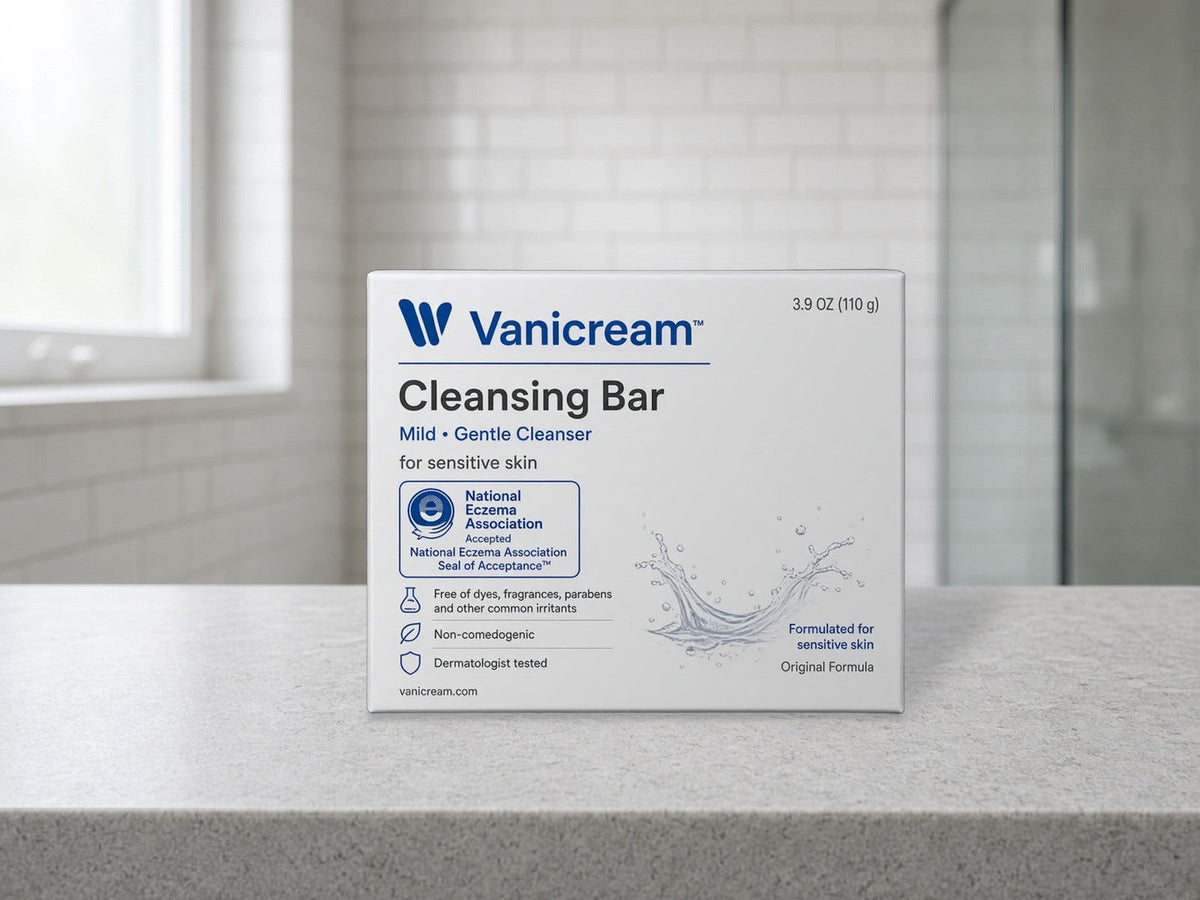
If you prefer a bar, the Vanicream Cleansing Bar 3.9 oz is made for sensitive skin. Vanicream describes it as a cleanser rather than a soap, because most of its cleansing ingredients are non-soap cleansers, and it is free of dyes and fragrance.
Whatever you wash with, follow the same gentle routine above: a short, warm wash, a thorough rinse, and moisturizer right after you pat dry.
For help choosing a face wash, see Best Fragrance-Free Face Cleanser for Sensitive Skin: Bar vs Liquid. Browse more cleansers in Skincare.
When to See a Dermatologist
The American Academy of Dermatology advises seeing a board-certified dermatologist if your skin stays dry after you have tried these steps, since ongoing dryness can come from a condition such as atopic dermatitis or psoriasis. Also check with a dermatologist before trying anti-itch creams on very dry skin, because the AAD notes that some contain ingredients that can make dryness and itch worse.
FAQ
How do I know if my water is hard?
Ask your water utility or local health agency, which the USGS says are the right sources for hardness at your home. On a well, a water test will report hardness. Signs at home include soap curd on the tub and needing extra soap to get a lather.
Can hard water cause dry, itchy skin?
It can add to irritation. The 2018 Journal of Investigative Dermatology study found hard water left more foaming cleanser on skin, and that residue weakened the skin barrier and caused redness, most of all in people with eczema.
Does hard water make eczema worse?
Hard water is linked to more eczema in babies, and it increased irritation from cleanser residue in people with eczema in a lab study. But in the 2011 trial, softening the water did not improve eczema in children beyond usual care.
Is a shower filter the same as a water softener?
Not necessarily. The softening tested in the 2011 and 2018 studies was ion exchange, which removes calcium and magnesium. Before buying any shower filter, check what its label says it removes.
Does hard water affect hair too?
Minerals in hard water can build up on hair too. See How to Remove Mineral Buildup From Hair: Hard Water Treatment Steps for what mineral buildup on hair looks like and how to remove it.
Should I stop using soap if I have hard water?
You still need to clean your skin. The American Academy of Dermatology recommends a gentle, fragrance-free cleanser used where you need it, without a thick lather, followed by moisturizer.
Find more skin and hair care guides in the Learning Center.
Disclaimer
Pure Supply Shop shares this guide as general skin care information. It is not medical advice. It does not diagnose, treat, cure, or prevent any disease, including eczema. Cleansing bars are cosmetic products for washing skin. If you have a rash, persistent dryness or itching, a skin condition such as eczema or psoriasis, or a baby or child with dry, irritated skin, talk with a dermatologist, pediatrician, or other qualified healthcare professional before changing your routine. Stop using any product that causes irritation.


