

Fasted training means exercising before you have eaten, usually first thing in the morning. If you train early, the choice can come down to a quick breakfast or a few extra minutes of sleep. Research on fasted and fed exercise gives a clearer answer than the gym advice you may have heard, and the answer depends mostly on how long and how hard you train.
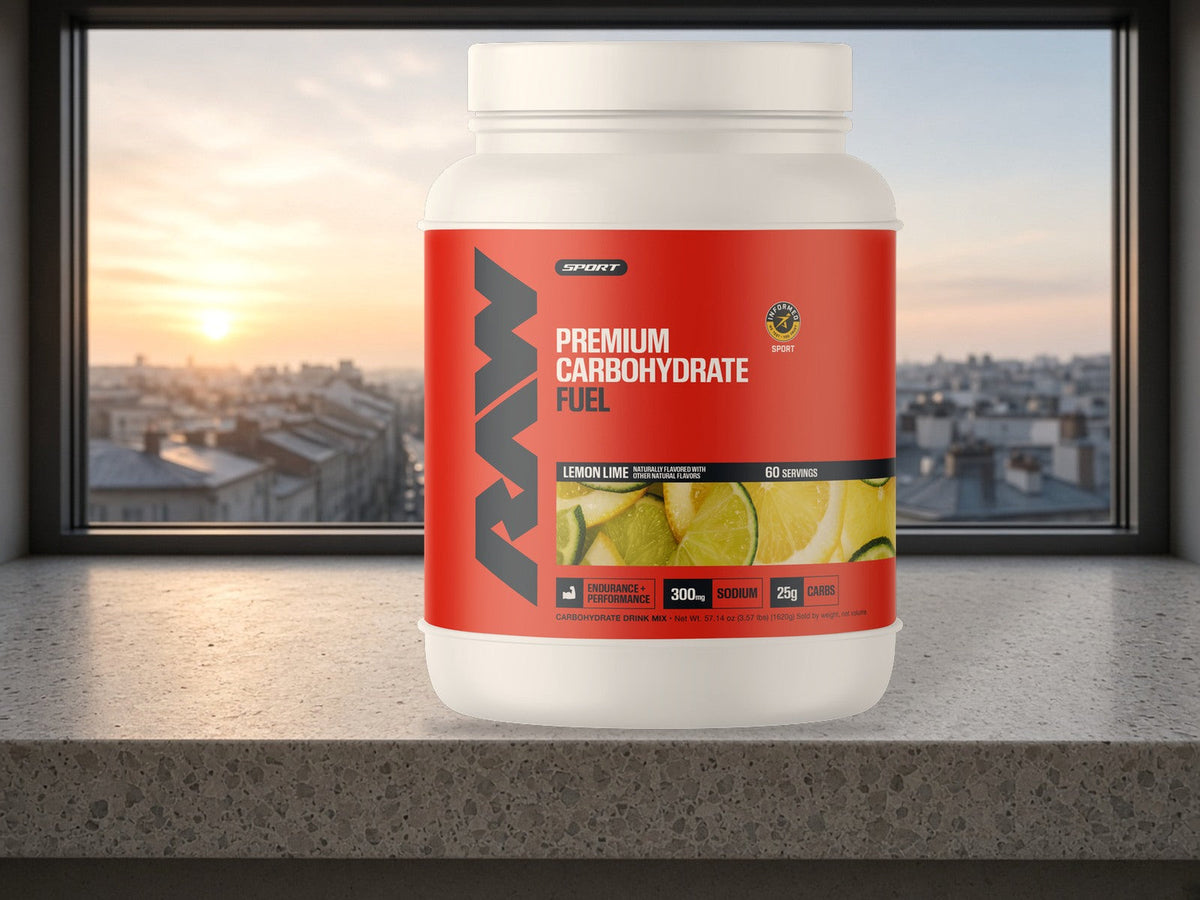
Want to shop first? See RAW Fuel Carbohydrate Drink Mix Lemon Lime, a carbohydrate drink mix made for longer training sessions.
The Short Answer
- A 2018 review of 46 studies found that eating before exercise improved performance in longer aerobic sessions, but not in shorter ones.
- A small 2014 study found that fasted and fed cardio led to similar fat loss over four weeks when both groups ate in a calorie deficit.
- Fasted exercise raised the amount of fat circulating in the blood after the workout, but that is not the same as losing more body fat.
- For long, hard sessions, sports nutrition researchers recommend taking in carbohydrate during the workout.
What Does Working Out on an Empty Stomach Mean?
In research, fasted exercise usually means training after an overnight fast, before breakfast. The 2014 study described below defined its fasted group this way: they exercised in the morning after an overnight fast and had their meal after the session. The fed group had the same meal before exercising.
So a morning run before breakfast counts as fasted training. A workout three hours after lunch is a different situation, even if you feel a little hungry.
Does Fasted Cardio Burn More Fat?
A common idea behind fasted training is that with no recent meal, your body leans more on fat for fuel during the session.
A study by Schoenfeld and colleagues in the Journal of the International Society of Sports Nutrition (2014) tested this directly. Twenty healthy young women followed a calorie-deficit diet and did one hour of steady-state cardio three days a week for four weeks. Half trained after an overnight fast and half trained after a meal replacement shake. Both groups lost weight and body fat, and the researchers found no significant difference between the two groups in any outcome they measured.
A 2018 systematic review by Aird and colleagues in the Scandinavian Journal of Medicine and Science in Sports found that fasted exercise increased free fatty acids in the blood after exercise compared with fed exercise. That means more fat was released into the bloodstream after a fasted session. The 2014 study suggests that this did not turn into more fat loss over four weeks when total calories were controlled.
The 2014 study was small and short, so it does not settle the question for every person or every program. For a broader look at body composition goals, see What Is a Healthy Body Fat Percentage? Ranges for Men and Women.
Does Eating Before a Workout Improve Performance?
The Aird review pulled together 46 studies comparing fasted and fed exercise. Its meta-analysis found that eating before exercise improved performance in prolonged aerobic exercise. For shorter aerobic sessions, it found no significant difference between fasted and fed conditions.
The International Society of Sports Nutrition (ISSN) review on nutrient timing, published by Kerksick and colleagues in 2017, describes a study in which a high-carbohydrate meal eaten four hours before 105 minutes of cycling, after an overnight fast, raised both muscle and liver glycogen. Glycogen is the stored form of carbohydrate your muscles draw on during hard exercise.
Put together, the research points the same way: the longer the session, the more a pre-exercise meal tends to matter.
Short Workouts vs Long Workouts
The research above splits fairly neatly by session length.
- Shorter aerobic sessions: the Aird review found no significant performance difference between training fasted and training fed.
- Longer, harder sessions: the ISSN nutrient timing review says sessions longer than 60 minutes at high intensity challenge your fuel supply. It recommends about 30 to 60 grams of carbohydrate per hour in a 6 to 8 percent carbohydrate-electrolyte drink, taken in 6 to 12 fluid ounces every 10 to 15 minutes, particularly in sessions that last beyond 70 minutes.
- Strength training: the same ISSN review says taking carbohydrate during resistance training has been shown to help keep blood sugar steady and support higher glycogen stores.
For more on carbohydrate during training, see Do You Need Carbs During a Workout? Intra-Workout Carb Drinks Explained.
Is There Any Benefit to Training Fasted?
Possibly, but the evidence is early. The Aird review found that eating before exercise blunted some signals in muscle and fat tissue linked to how the body adapts its metabolism, and it noted early evidence that fasted exercise may lead to helpful metabolic changes in those tissues. The authors also wrote that more research is needed to understand the short-term and long-term effects.
That means fasted training is a reasonable choice if it suits your schedule and you feel well doing it, especially for shorter sessions. The research reviewed here does not show it is a faster route to fat loss.
How to Decide Whether to Eat Before You Train
These questions follow the research above.
- How long is the session? For sessions longer than about an hour, the research favors eating beforehand and taking in carbohydrate during the session.
- How hard is it? The ISSN guidance on carbohydrate during exercise is aimed at long, high-intensity work.
- How does your stomach handle food? The ISSN review cautions against eating so much before exercise that it overwhelms your digestive system, which can lead to cramping and discomfort once you start.
- Are you taking a stimulant pre-workout? Timing and food matter for those too. See When to Take Pre-Workout: Timing for Morning, Evening, and Non-Stim.
If you feel dizzy, shaky, or unwell when you exercise without eating, stop and eat something, and talk with a healthcare professional. If you have diabetes or take medication that lowers blood sugar, ask your healthcare team before training fasted.
Where RAW Fuel Fits
RAW Fuel Carbohydrate Drink Mix Lemon Lime is a carbohydrate drink mix from RAW Nutrition. Its label lists 25 grams of carbohydrate and 300 milligrams of sodium per serving, with 60 servings per tub, and the tub carries the Informed Sport mark.
It fits the longer, harder sessions where the ISSN nutrient timing review recommends carbohydrate during exercise. Mix it with water and follow the directions on the label. Fluids matter in long sessions too, so see How Much Water Should You Drink During a Workout? Sweat Rate and Electrolytes.
FAQ
Is it okay to do cardio on an empty stomach?
For shorter sessions, the Aird review found no significant performance difference between fasted and fed aerobic exercise. For longer sessions, eating beforehand improved performance. If you feel unwell training fasted, eat first.
Does fasted cardio burn belly fat faster?
The 2014 study in the Journal of the International Society of Sports Nutrition found similar fat loss in fasted and fed groups over four weeks when both followed a calorie-deficit diet. It did not measure belly fat on its own.
Should I eat before lifting weights?
The ISSN nutrient timing review says taking carbohydrate during resistance training can help keep blood sugar steady and support glycogen stores. It also notes that the size and timing of a meal before exercise may affect how much protein you need afterward.
What should I eat before a morning workout?
The research reviewed here does not give one meal for everyone. A registered dietitian can build a plan around your schedule, training, and stomach comfort.
Is it bad to take pre-workout on an empty stomach?
It depends on the formula and how your body handles it. See When to Take Pre-Workout: Timing for Morning, Evening, and Non-Stim for timing and food questions.
Find more training guides in the Learning Center, or browse the Health collection.
Disclaimer
Dietary supplements are not drugs. These statements have not been evaluated by the Food and Drug Administration. Carbohydrate drink mixes are not intended to diagnose, treat, cure, or prevent any disease. Pure Supply Shop shares this guide as general fitness and sports nutrition information, and it is not medical advice. Talk with a qualified healthcare professional before starting a new supplement or training program, especially if you are pregnant, nursing, under 18, taking medication, or have diabetes, a heart condition, or another medical condition. Follow the directions on the product label, and stop using any product that causes a reaction.


