

How much water should you drink during a workout? No single number fits everyone, because sweat losses change from person to person and from session to session. You can still find your own range with a bathroom scale and a little math. Here is what sports medicine groups recommend before, during, and after training, how to estimate your sweat rate, when plain water is enough, and why drinking too much water during exercise is a real problem too.
Training longer than an hour and wondering about carbs as well? Start with Do You Need Carbs During a Workout? Intra-Workout Carb Drinks Explained.
The Short Answer
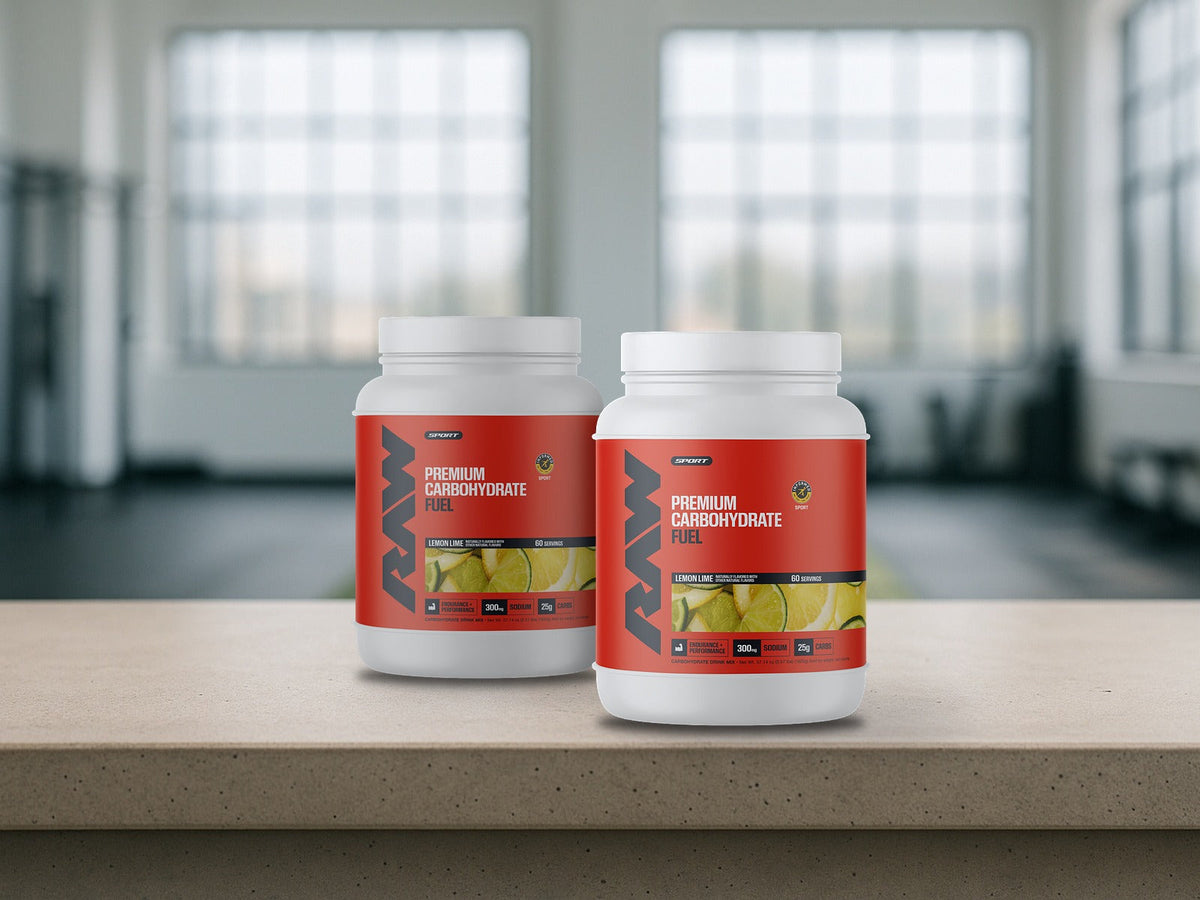
Start your session already hydrated, sip regularly while you train, and aim to finish without losing more than about 2 percent of your body weight, while never finishing heavier than you started. As a starting point, Cleveland Clinic suggests about 16 ounces of water two to three hours before exercise and about 4 ounces every 15 to 20 minutes while you exercise. From there, a simple before-and-after weigh-in tells you whether you need more or less. For sessions longer than about an hour, a drink with electrolytes can help. If you want one built for long training days, RAW Fuel Carbohydrate Drink Mix Lemon Lime is a carbohydrate and electrolyte mix with 25 grams of carbohydrate and 300 mg of sodium per serving, according to RAW Nutrition.
Why There Is No One Number for Everyone
The American College of Sports Medicine's 2007 guidance on exercise and fluid replacement, published in Medicine and Science in Sports and Exercise, notes that sweat rates and the amount of electrolytes in sweat vary a lot between individuals, so it recommends customized fluid plans instead of one fixed amount. The National Athletic Trainers' Association made the same point in its 2017 statement on fluid replacement in the Journal of Athletic Training: sweat rate, thirst, and how much people drink during exercise all vary widely, so fluid advice should be individualized.
Several things change how much you sweat on a given day:
- Heat and humidity in the room or outdoors.
- How hard and how long you train.
- Your body size and the clothing or gear you wear.
- Heat acclimatization. The NATA notes that sweat losses go up as your body adapts to training in the heat.
A lifter in a cool gym and a runner on a humid afternoon can need very different amounts of fluid for the same hour.
What the 2 Percent Line Means
The ACSM guidance says the goal of drinking during exercise is to prevent excessive dehydration, defined as losing more than 2 percent of body weight from water loss, along with large shifts in electrolyte balance, because both can hurt performance. The NATA statement adds that body temperature control starts to suffer once fluid loss passes about 1 percent, and that the risk of heat illness rises at moderate to severe levels above 3 percent. It recommends finishing exercise with less than 2 percent body mass loss.
In real numbers, 2 percent of 150 pounds is 3 pounds, and 2 percent of 200 pounds is 4 pounds.
How to Estimate Your Sweat Rate
The NATA statement describes a simple sweat-rate equation based on body weight before and after exercise, and the ACSM guidance also says individual sweat rates can be estimated this way. Here is how to do it at home:
- Weigh yourself right before your workout, wearing the same clothes you will train in.
- Keep track of how much you drink during the session.
- Note whether you used the bathroom during the session, since that weight is not sweat.
- Towel off and weigh yourself again right after you finish.
- Add it up: weight before, minus weight after, plus the fluid you drank, equals your sweat loss. Divide by the hours you trained to get your sweat rate per hour.
Here is an example. You weigh 160 pounds before a one-hour session, drink 16 ounces during it, and weigh 159 pounds after. One pound of water is a little over 15 fluid ounces, so your sweat loss was about 15 ounces plus the 16 ounces you drank, or roughly 31 ounces in that hour. Your weight dropped well under the 2 percent line, so that plan worked for that session.
The NATA recommends repeating sweat-rate checks several times in realistic conditions and at different intensities, so test a hot day and a cool day, or a hard day and an easy one. Any reliable bathroom scale works. If you already weigh in on a smart scale such as the Hume Health Body Pod, use the body weight reading for this math.
What to Drink Before, During, and After Training
Before
The ACSM guidance says to start activity well hydrated and, when extra fluid is needed, to drink at least several hours before training so your body has time to absorb it and pass any extra. Cleveland Clinic's starting point is about 16 ounces of water two to three hours before exercise.
During
Cleveland Clinic suggests about 4 ounces every 15 to 20 minutes during exercise. The NATA statement notes that drinking about 200 milliliters (roughly 7 ounces) every 15 to 20 minutes may suit how quickly fluid leaves the stomach, though that can be hard to fit into some sports. Use your sweat-rate result to adjust. The aim is to cover enough of your losses to stay under the 2 percent line without drinking more than you sweat.
After
The NATA recommends eating and drinking within 2 hours after activity to replace fluid, electrolytes, carbohydrate, and protein. If you have less than 4 hours before your next session, it notes you may need up to 150 percent of the fluid you lost, because your body passes some of a large drink as urine. With more than 12 hours to recover, regular meals and drinking to thirst usually restore balance.
Water or an Electrolyte Drink?
For most short sessions, water does the job. Cleveland Clinic says water is all you need for low to moderate activity lasting an hour or less, and that longer activity may call for a sports drink that replaces sodium and potassium lost in sweat. Cleveland Clinic registered dietitian Carly Sedlacek, RD, LD, says electrolyte beverages should be used during activities lasting longer than 60 minutes, and that people with a history of chronic disease or other conditions should check with a doctor before adding higher sodium drinks.
The ACSM guidance agrees that drinks with electrolytes and carbohydrate can offer benefits over water alone in certain situations. The NATA adds that sodium intake should be enough to replace losses but not excessive, and that any sodium plan should be individualized and practiced in training first.
Two options we carry fit different sessions:
- Long or hard training days: RAW Fuel Carbohydrate Drink Mix Lemon Lime. RAW Nutrition describes Fuel as an endurance formula with 25 grams of carbohydrate from a glucose and fructose blend plus 300 mg of sodium per serving, made for long sessions where water alone falls short. For how much carbohydrate per hour makes sense, see Do You Need Carbs During a Workout? Intra-Workout Carb Drinks Explained.
- Lighter sipping during training: RAW EAA+ Essential Amino Acids in Icy Lemon Slush. RAW Nutrition says EAA Plus includes a hydration blend with sodium and chloride and is made to sip during your workout or through the day. For what EAAs do, read EAA vs BCAA: What Is the Difference, and When Should You Take EAAs?.
Mix either one as the label directs and keep plain water nearby as well.
Can You Drink Too Much Water During a Workout?
Yes. The NATA statement explains that exercise-associated hyponatremia, a drop in blood sodium, is caused by drinking too much fluid that is lower in salt than blood, including sports drinks, often combined with the kidneys clearing water more slowly. It usually shows up as body weight that stays the same or goes up during exercise lasting an hour or more. The NATA's guidance is direct: do not drink more fluid than you lose during exercise, weigh yourself before and after to check, and do not gain weight during a workout.
Early signs of overdrinking and dehydration can look alike, including thirst, general discomfort, fatigue, headache, and vomiting. Later signs of low blood sodium listed by the NATA include swelling of the hands or feet, confusion, mood changes, and seizures. This is a medical emergency, so get help right away if those signs appear.
An electrolyte drink is not a free pass to drink without limit. The before-and-after weigh-in keeps you in a safe range.
Where Glycerol Fits
Glycerol is a different tool from your during-workout drinking plan. It is used to help the body hold onto fluid. For what it does and how people use it, see What Does Glycerol Do in Pre-Workout? Hydration and Fullness and How to Use Liquid Glycerol: Dose, Timing, and Mixing Steps. Keep in mind that the 2017 NATA statement does not recommend glycerol hyperhydration (taking glycerol with extra fluid to load up on water before exercise) for athletes, citing possible side effects such as headache, lightheadedness, and nausea and not enough evidence of a performance benefit. If you use a glycerol product, follow the label and still base your water intake on your sweat rate.
Everyday Hydration Checks
- Urine color: Cleveland Clinic says clear, pale, or straw-colored urine is a good sign, and darker urine means you should drink more.
- Thirst and bathroom trips: the NATA lists thirst and how often you urinate as useful personal cues over the course of a day.
- Your weight trend: a quick weigh-in before and after hard sessions shows how well your plan matches your sweat.
- Age: the NATA notes that after age 50, thirst becomes a less reliable signal, so planned drinking matters more.
Browse more training support in Health and Pre-Workout Powder.
When to Talk With a Professional
Talk with your healthcare provider before changing your fluid or sodium intake if you have heart disease, diabetes, or another chronic condition, or if you take medications such as diuretics (water pills). Cleveland Clinic notes that people with conditions like these may need to be cautious with fluid amounts, and that diuretics can increase fluid loss. Cleveland Clinic lists emergency signs of severe dehydration or heatstroke that need immediate care, including a fever of 103 degrees Fahrenheit or higher, confusion or slurred speech, red, hot, and dry skin, a lack of sweating, fainting, and seizures. Call emergency services if you notice any of them during or after exercise.
FAQ
How much water should I drink during a one-hour workout?
A common starting point from Cleveland Clinic is about 4 ounces every 15 to 20 minutes, which works out to roughly 12 to 16 ounces in an hour. Then check your sweat rate. If you lose more than about 2 percent of your body weight, drink a bit more next time. If you finish heavier than you started, drink less.
Should I drink water before a workout?
Yes. Cleveland Clinic suggests about 16 ounces two to three hours before exercise, and the ACSM guidance recommends drinking early enough that your body can absorb the fluid and pass any extra before you start.
Is it okay to just drink when I am thirsty?
For many people, yes. The NATA statement says most people can avoid fluid problems by drinking when thirsty during and after exercise and eating a healthy diet. It also notes that people drinking freely tend to replace about two-thirds of their sweat losses, so heavy sweaters, long sessions, and hot days are when a planned approach based on sweat rate helps most.
Does the caffeine in pre-workout dehydrate you?
The NATA statement says caffeine may increase urine output for a short time at rest but does not cause extra fluid loss during exercise, and that moderate caffeine does not need to be avoided for hydration reasons. Caffeine has other limits worth knowing, which Is Pre-Workout Powder Safe? Does It Work? walks through.
How much should I drink after a workout?
If your next session is less than 4 hours away, the NATA notes you may need up to 150 percent of the fluid you lost to fully replace it. If you have the rest of the day, normal meals and drinking to thirst usually bring you back to balance.
Find more training guides in the Learning Center.
Disclaimer
Pure Supply Shop shares this guide as general sports nutrition information. It is not medical advice. These statements have not been evaluated by the Food and Drug Administration. Drink mixes and amino acid powders are not intended to diagnose, treat, cure, or prevent any disease, and they do not replace water, balanced meals, or medical care. Fluid and sodium needs vary with body size, climate, training, and health. Talk with a qualified healthcare professional before changing your fluid, sodium, or supplement intake, especially if you are pregnant, nursing, under 18, taking medications, or have a medical condition, including heart, kidney, or blood pressure concerns. Formulas and serving sizes can change, so follow the directions on your product label. Individual results vary.


