

If you are asking what the Hume Body Pod measures, you are usually past the "do I need a smart scale" question. You want the metric map: which readings matter for at-home trends, what is an estimate vs a clinical snapshot, and how to read the app without chasing one noisy day.
This guide is a metric-by-metric explainer for the Hume Health Body Pod. For accuracy, free vs Premium app basics, and how to read trends, start with Is the Hume Body Pod Accurate? App Subscription FAQ. For why a composition scale beats weight alone when you are shopping, see What Is the Best At-Home Body Composition Scale? Hume Health Body Pod.
Shop the Hume Health Body Pod Smart Scale.
Body composition readings from consumer BIA scales are estimates. They are not medical diagnosis. Use trends under consistent conditions, and talk with a qualified clinician for health decisions.
Short Answer: More Than Weight
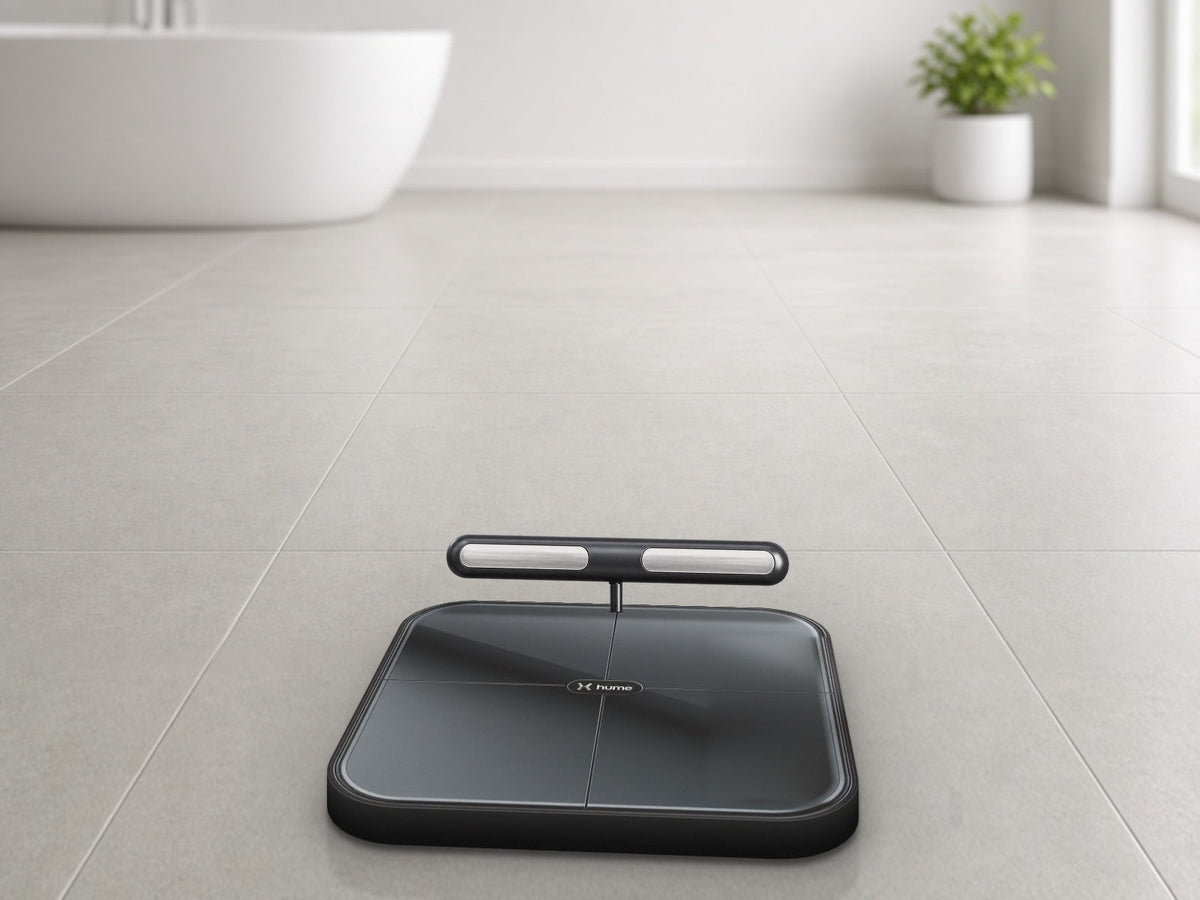
In plain language, the Body Pod is a smart body composition scale that estimates more than the number on a bathroom scale. Hume builds it around multi-frequency bioelectrical impedance analysis (BIA) with sensors in the platform and a handheld bar, and a broad set of composition metrics (Hume says about 45 measurements).
Most people care about a smaller core set:
- Weight
- Estimated body fat (percentage and fat mass)
- Muscle and lean-related estimates
- Body water and hydration-related estimates (including compartments when shown)
- Visceral fat estimates
- Related wellness views such as metabolic age, bone-related estimates, segmental muscle views, and heart-rate style readings when your app view supports them
Exact labels and charts can vary by app version and profile. Always confirm what you see on your own Hume Health app screen after a scan.
How the Body Pod Estimates Composition (Plain Language)
Most home composition scales send a small, safe electrical signal through the body and estimate tissues from how that signal travels. Fat, muscle, and water conduct differently. Multi-frequency systems try to gather more detail than a single-frequency foot-only scale.
According to Hume, the Body Pod uses:
- Platform and handheld bar so pathways can include hands and feet, not only foot-to-foot
- Multi-frequency BIA so fluid and tissue estimates can be richer than a basic single-frequency scan
- App sync over Bluetooth so you can review trends instead of one isolated number on the glass
That still means estimates for personal trends, not a clinic appointment in a box. Hydration, food timing, exercise, menstrual cycle, and posture can move readings. Weekly averages beat one noisy day.
Metric Guide: What Most People Watch
Weight
Weight is the familiar baseline. Useful for spotting large shifts. Limited alone, because the same pounds can mean fat loss, muscle gain, water retention, or a mix. Pair weight with composition estimates before you change your whole plan.
Body fat percentage and fat mass
Body fat percentage estimates how much of your total weight is fat. Fat mass estimates the absolute amount of fat. Fat mass can be easier to read when scale weight is flat: you can still lose fat while gaining muscle. Treat both as trend tools, not diagnoses.
Muscle mass and lean-related metrics
Muscle and lean-related estimates help show whether training and protein habits support tissue you want to keep. If weight drops while muscle-related estimates fall hard, review recovery and training with a coach or clinician rather than panicking over one scan.
Total body water, intracellular water, extracellular water
Total body water helps explain noisy day-to-day scale swings from sodium, carbs, stress, travel, sleep, and hard workouts. When the app separates intracellular and extracellular water, treat that as fluid-distribution context for recovery, not a lab hydration panel or edema screen.
Visceral fat estimates
Visceral fat is associated with the abdominal cavity around organs, distinct from the subcutaneous fat you can pinch. Home scales estimate a related score or level; they do not replace clinician-ordered imaging. Track direction over weeks for wellness goals, and bring clinical concerns to a qualified professional.
Segmental muscle views
Some app views estimate composition by region (arms, legs, trunk) rather than only a whole-body average. That can flag left-right or upper-lower training imbalances. It is still an estimate, not an injury diagnosis.
Bone-related and skeletal estimates
Hume includes bone-related and skeletal mass style metrics as part of the broader picture. Home BIA bone estimates are not a DEXA bone-density test. Use them for long-horizon personal baselines only.
Metabolic age and related summary scores
Metabolic age and similar scores turn composition inputs into a simpler trend to follow. Helpful when scale weight is stuck during recomposition. They are wellness summaries, not biological age lab tests.
Heart rate and HRV-style readings (when shown)
Depending on your device session and app view, you may see heart-rate style readings alongside composition. Treat them as wellness context. They are not a cardiac diagnostic workup.
What the App Adds
Readings sync to the Hume Health app so you can review charts and averages. Free app basics cover weighing in and viewing body measurements per Hume's FAQ. Optional Premium extras are nice-to-have for deeper reports, not a gate to use the scale. Full free-vs-Premium detail lives in Is the Hume Body Pod Accurate? App Subscription FAQ. Confirm current tiers inside the app, because app features can evolve.
How to Read Metrics Without Getting Lost
- Pick a consistent window. Same time of day, similar hydration, bare feet, steady posture, hard flat floor.
- Watch weekly averages, not one dramatic morning after salty food or a hard workout.
- Pair two metrics. Example: weight and fat mass, or weight and a muscle-related estimate.
- Change one habit at a time when you experiment (sleep, steps, protein, training load).
- Escalate to a clinician for unexplained weight change, pregnancy questions, implanted devices, or any medical concern.
If you are building training habits beside scale trends, see Creatine for Women Beginners: A Simple, No-Hype Starter Guide for supplement education (check live stock before you shop creatine).
Who This Metric Map Helps Most
- People whose scale weight is flat but clothes and training feel different
- Anyone comparing a basic weight-only scale to a composition scale
- Anyone who already owns or is considering the Hume Health Body Pod Smart Scale and wants to know which charts to open first
Browse more wellness tech in Smart Health & Fitness Devices, plus everyday essentials in Wellness and Health. More guides live in News.
How to Choose in 60 Seconds
Ask yourself:
- Do you only need a weight number? A basic scale may be enough.
- Do you want fat, muscle, water, and related estimates for personal trends? A composition scale is the better fit.
- Do you want platform and handheld pathways and a broad metric set? Look at the Hume Health Body Pod Smart Scale.
- Do you still have accuracy or subscription questions? Read Is the Hume Body Pod Accurate? App Subscription FAQ.
- Are you still shopping the category? Start with What Is the Best At-Home Body Composition Scale? Hume Health Body Pod.
- Do you need medical advice? Talk with a healthcare professional. Home BIA is not a substitute for clinical testing.
Quick FAQ
What does the Hume Body Pod measure beyond weight?
Estimated composition metrics such as body fat, muscle-related measures, body water (and related compartments when shown), visceral fat estimates, plus related app views such as metabolic age, segmental muscle, and bone-related estimates depending on your app screen. Hume says the Body Pod reports about 45 measurements in total.
Are these medical-grade diagnoses?
No. Treat them as wellness estimates for personal trends. DEXA and other clinical methods remain the reference when a clinician needs a clinical snapshot.
Why did my numbers jump overnight?
Hydration, sodium, carbs, hard training, sleep, travel, and menstrual cycle timing commonly move BIA estimates. Compare weekly averages before you overhaul your plan.
Do I need a paid Hume app subscription to see my measurements?
No, per Hume's FAQ for essential weighing and viewing body measurements. Optional Premium is separate. Details: Is the Hume Body Pod Accurate? App Subscription FAQ.
Can I use the Body Pod if I am pregnant?
Follow Hume's current product and app guidance, and ask your clinician before using any BIA scale during pregnancy. This article does not give pregnancy medical advice.
Disclaimer
This content is for educational and informational purposes only and is not intended to diagnose, treat, cure, or prevent any disease or medical condition. At-home body composition scales that use bioelectrical impedance analysis (BIA), including the Hume Health Body Pod Smart Scale, provide estimates for general wellness and fitness trend-tracking; they are not medical devices for diagnosis unless a specific product is lawfully labeled and regulated as such. Readings can vary with hydration, food intake, exercise, menstrual cycle, and other factors. Do not use consumer scale data to make medical decisions. Consult a qualified healthcare professional for body-composition concerns, unexplained weight changes, implanted medical devices, pregnancy questions, or any health condition. App features and metric labels can change; verify current displays in the Hume Health app. Individual results and experiences vary. Pure Supply Shop does not provide medical advice.


